 Bespoke made in 10-12 weeks
 National Installation
 Worldwide Shipping


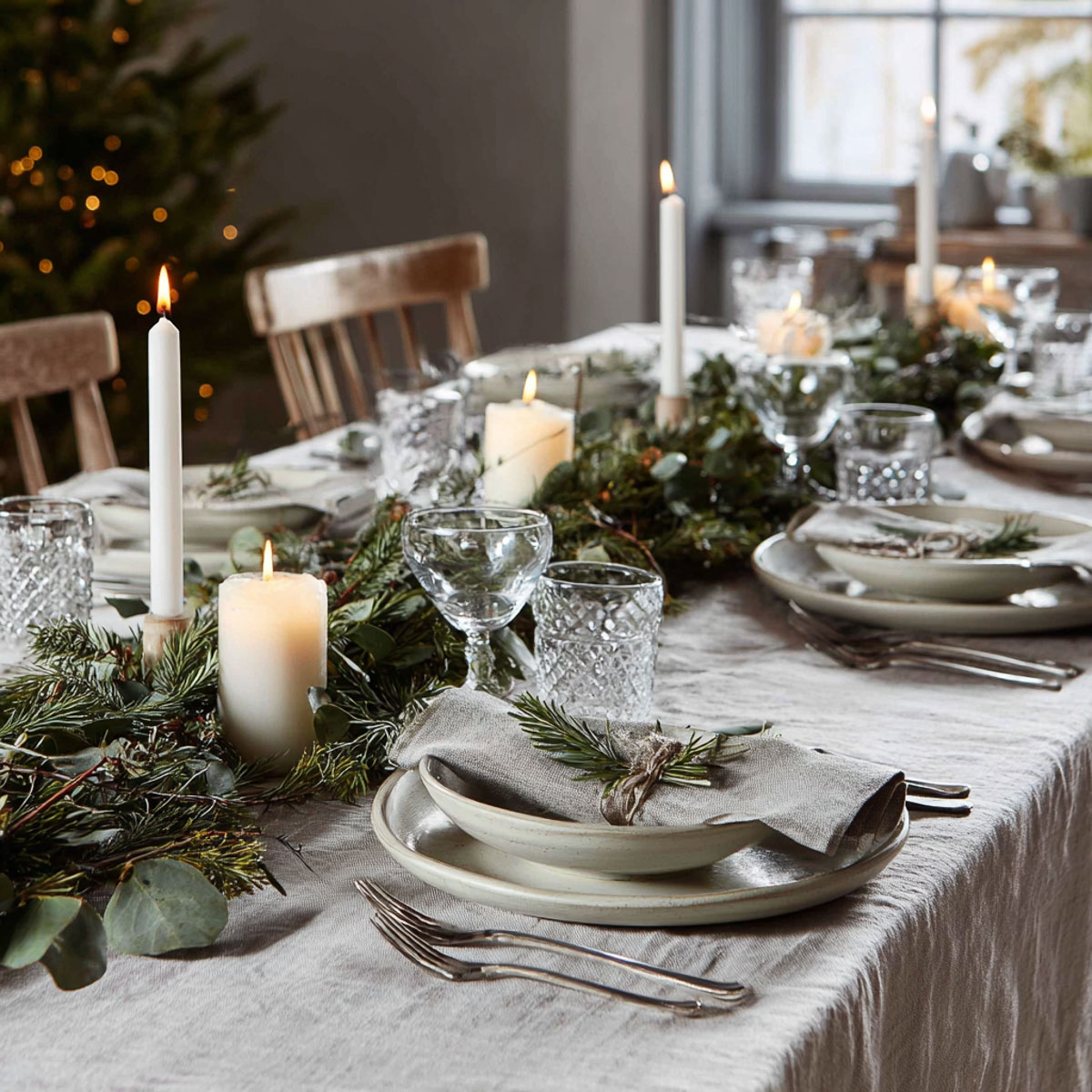
Many homes have their own rhythm at Christmas. Old china comes out of the dresser, holly and ivy are cut from the garden or bought from a market, and someone always finds the box of candles. Tablescaping is simply about putting those things together thoughtfully. In practice that means starting with a good tablecloth, plates, glasses, cutlery and candles, then layering in greenery and decoration. What you choose to put on the table should feel as if it belongs there – whether it was foraged on a winter walk or brought home from the local florist or high-street shop – and there’s no need for a ‘theme’. Each of the colour schemes below has its own mood, but all of them rely on materials that are easy to find nearby and a few carefully chosen pieces of tableware.
How to tablescape for Christmas in five steps
- Start with a tablecloth or runner in linen or cotton.
- Set plain plates, glasses and cutlery for each guest.
- Add a loose line of greenery down the centre.
- Bring in height and light with candles.
- Finish with small natural touches such as pine cones, berries or a sprig of rosemary on each napkin.
Each of the six colour schemes below follows these steps, with a different palette.
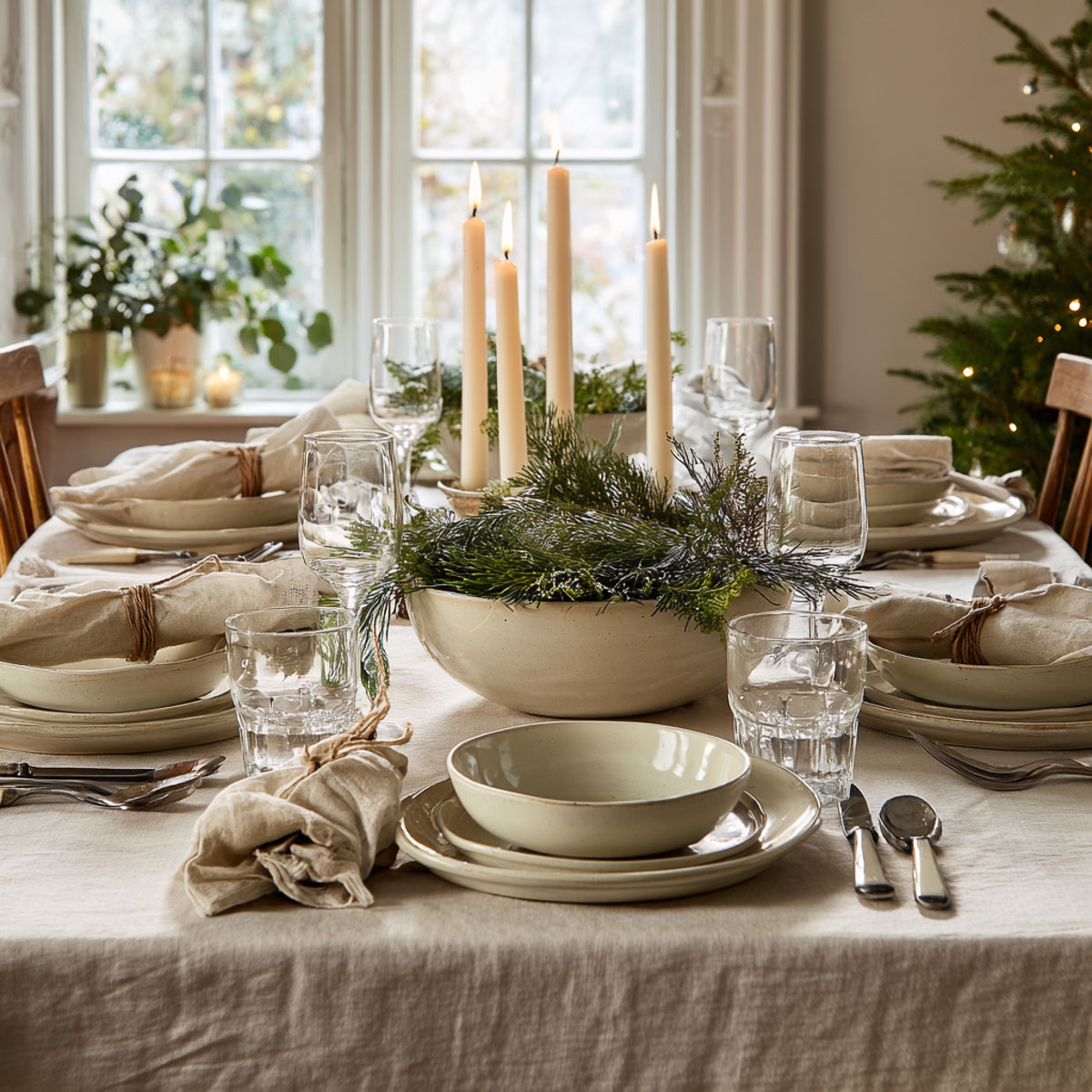
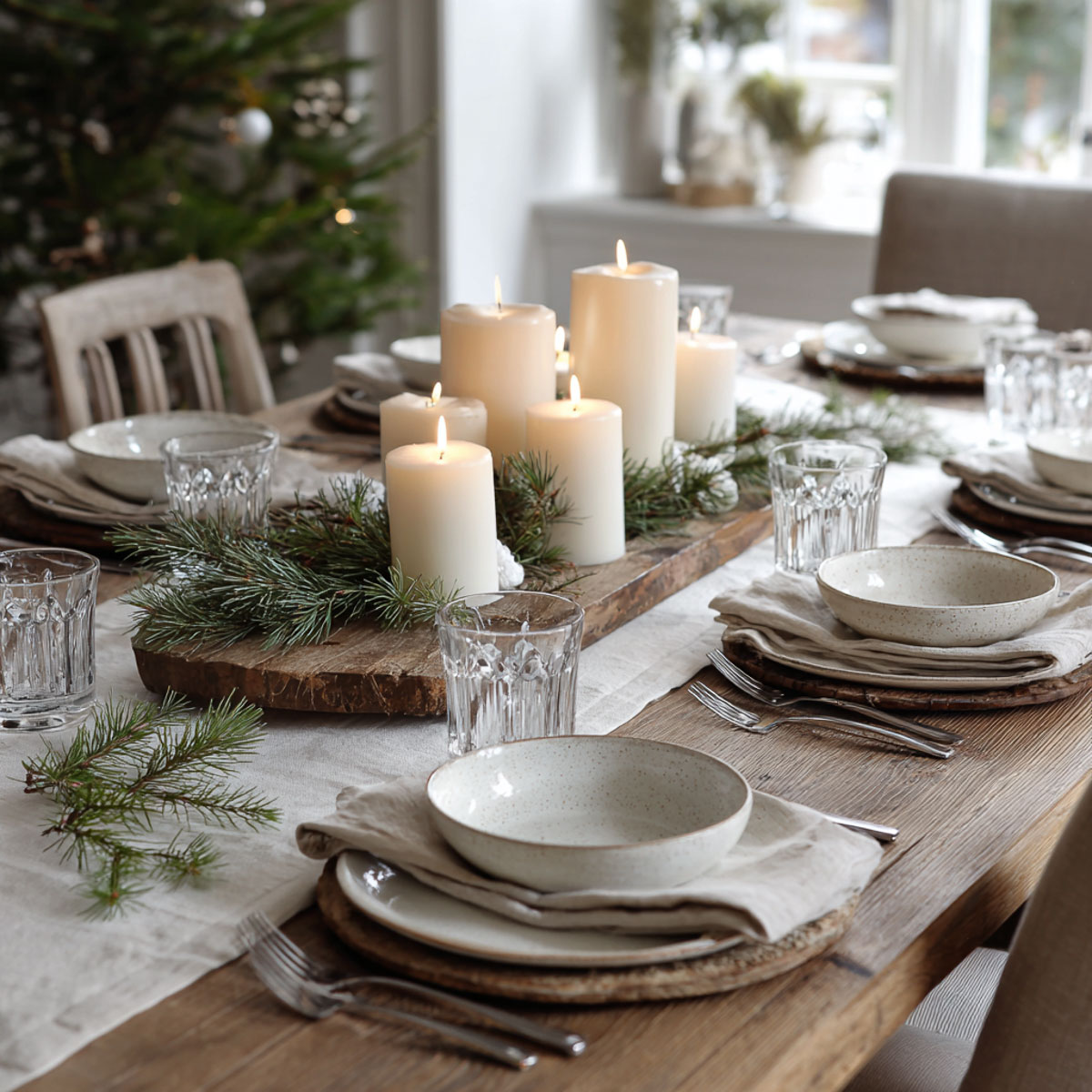
Greens and Natural Layers
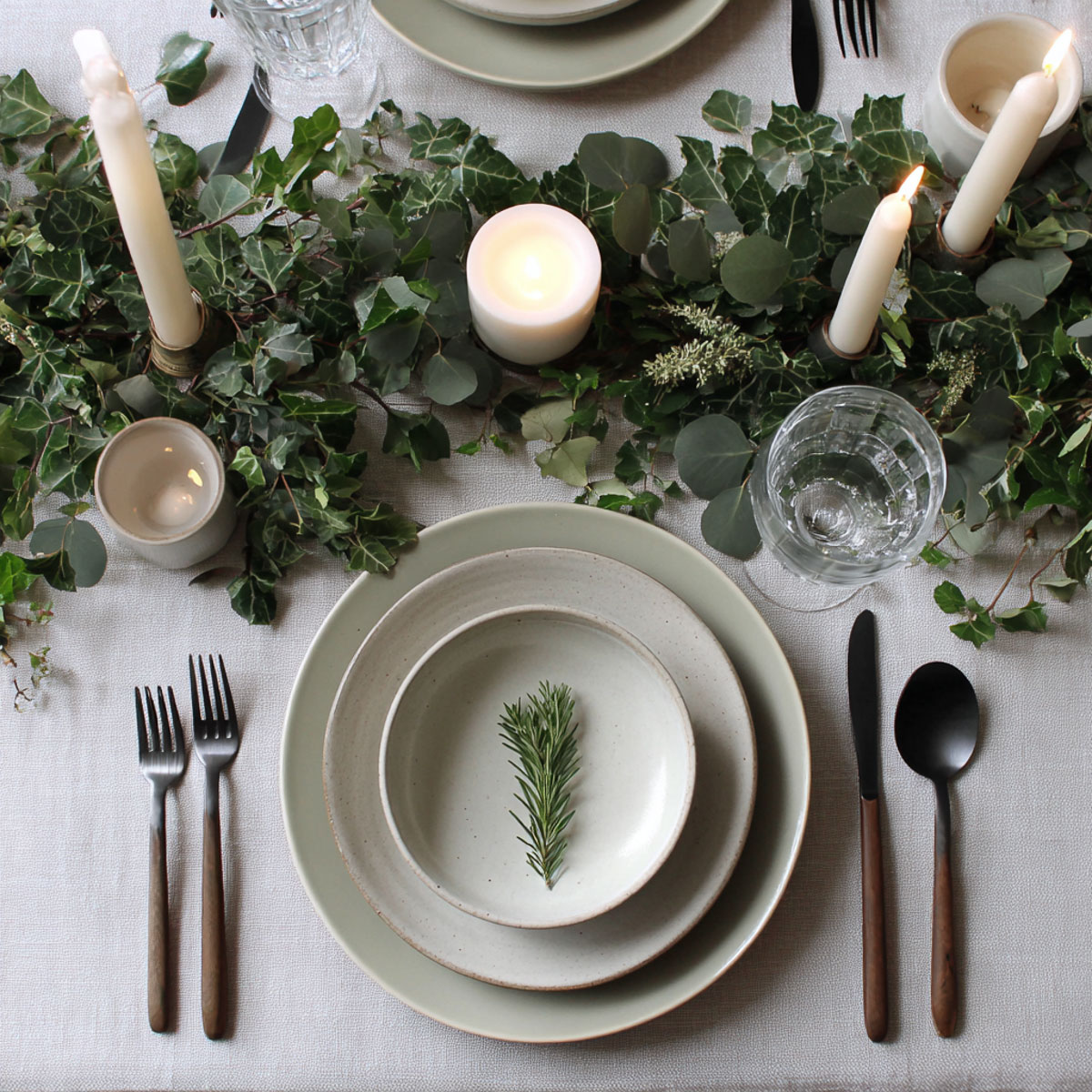
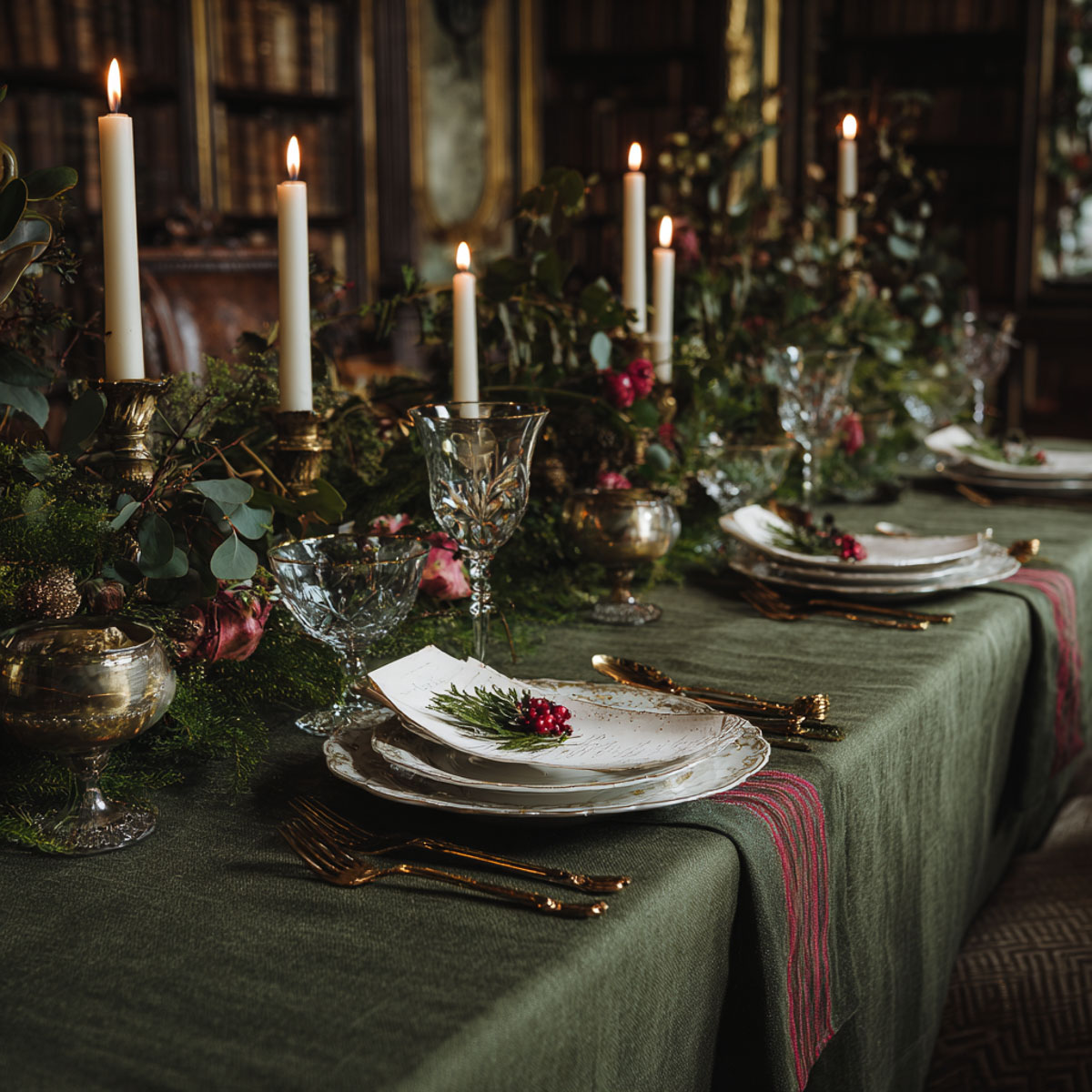
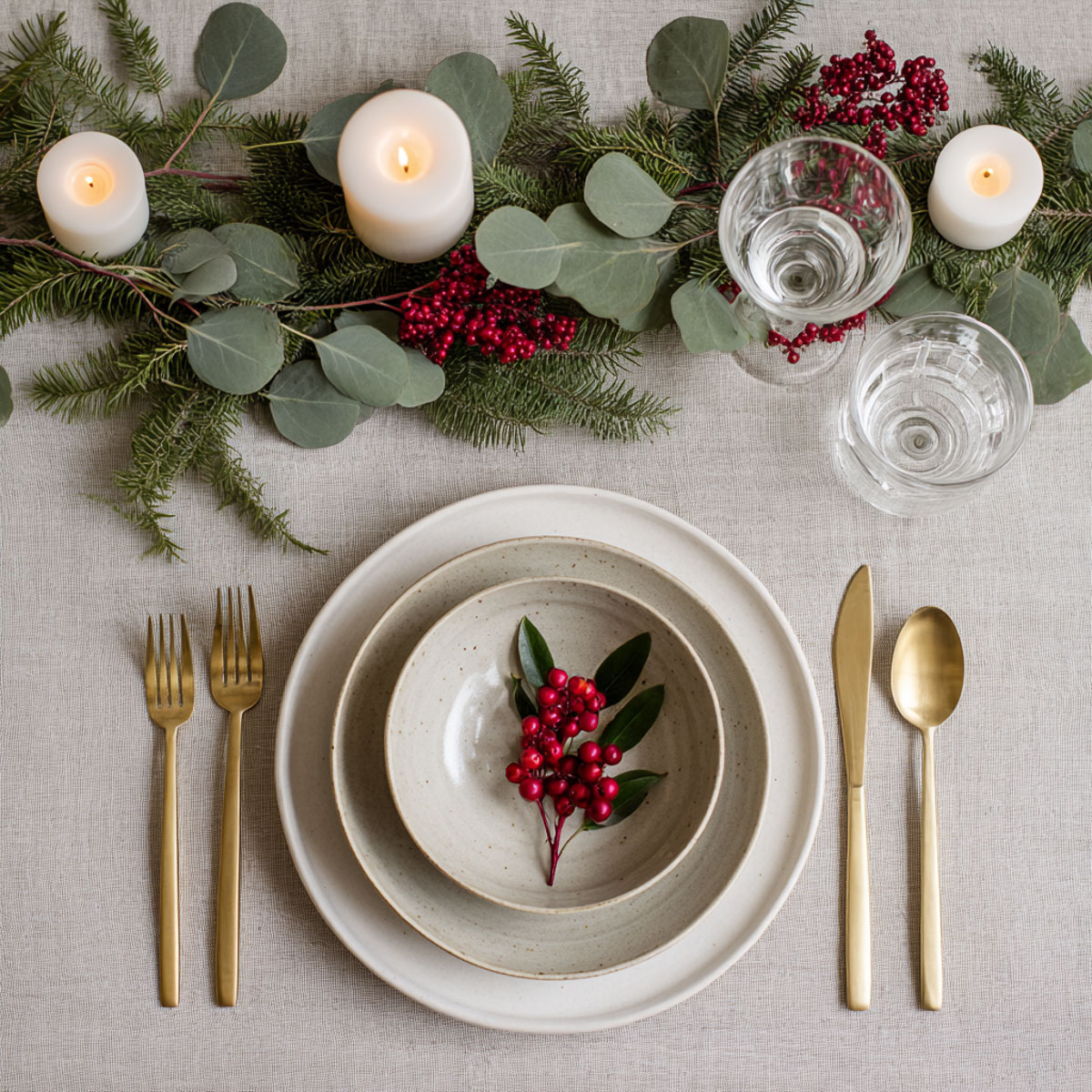
When you build your table around greenery, it’s as if you’ve brought a winter walk indoors. Fir, spruce, pine, eucalyptus, holly and ivy sit comfortably together, whether cut from the garden or bought in small bunches. A loose line of foliage adds shape without filling the table. Choose stoneware plates, clear glassware and linen; both gold and silver work with green, depending on your room. Candles in tones that suit the foliage – slender taper or broad pillar, ivory or deep green – give height and light without fuss. Pine cones or a sprig of rosemary tied to each napkin add a personal, natural touch.

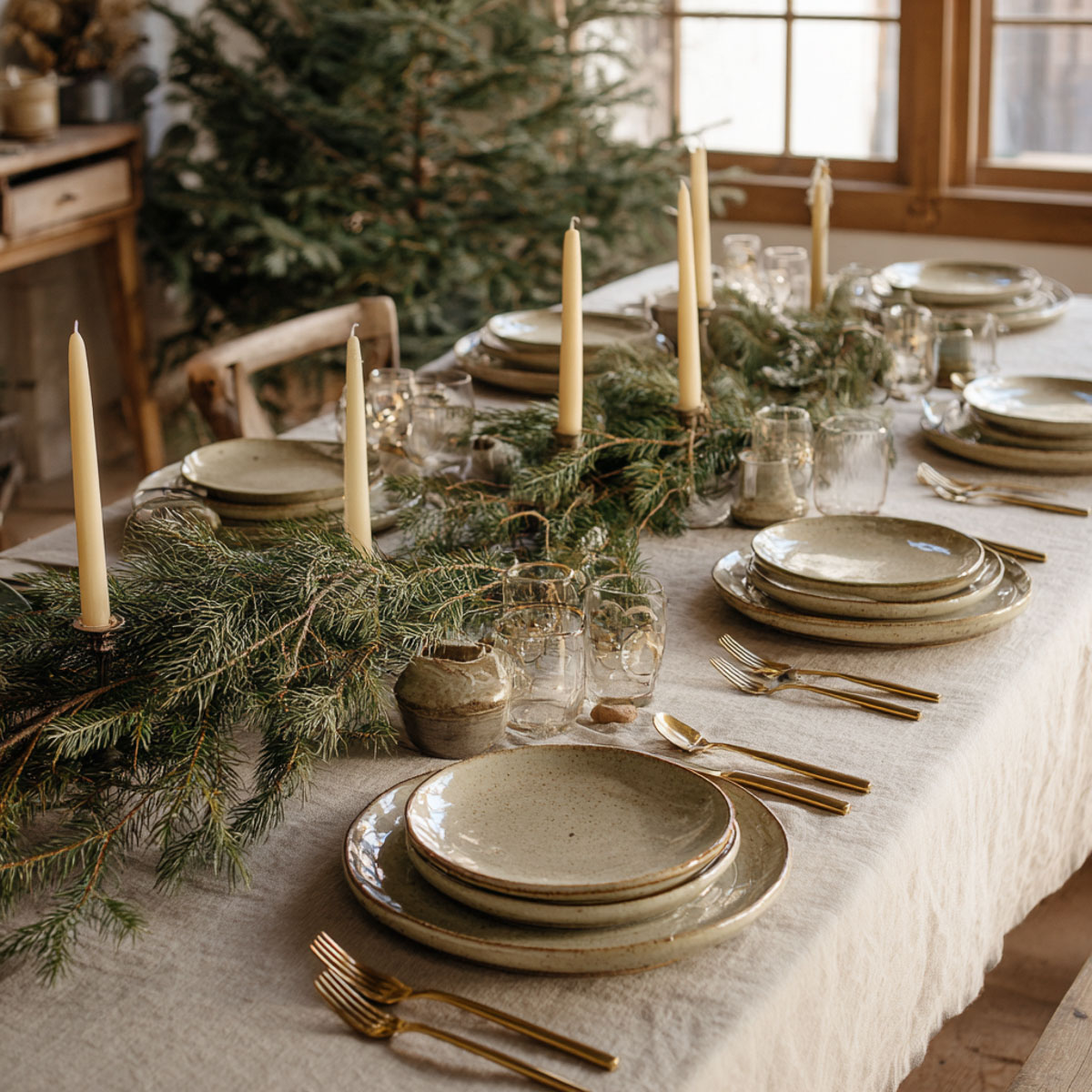

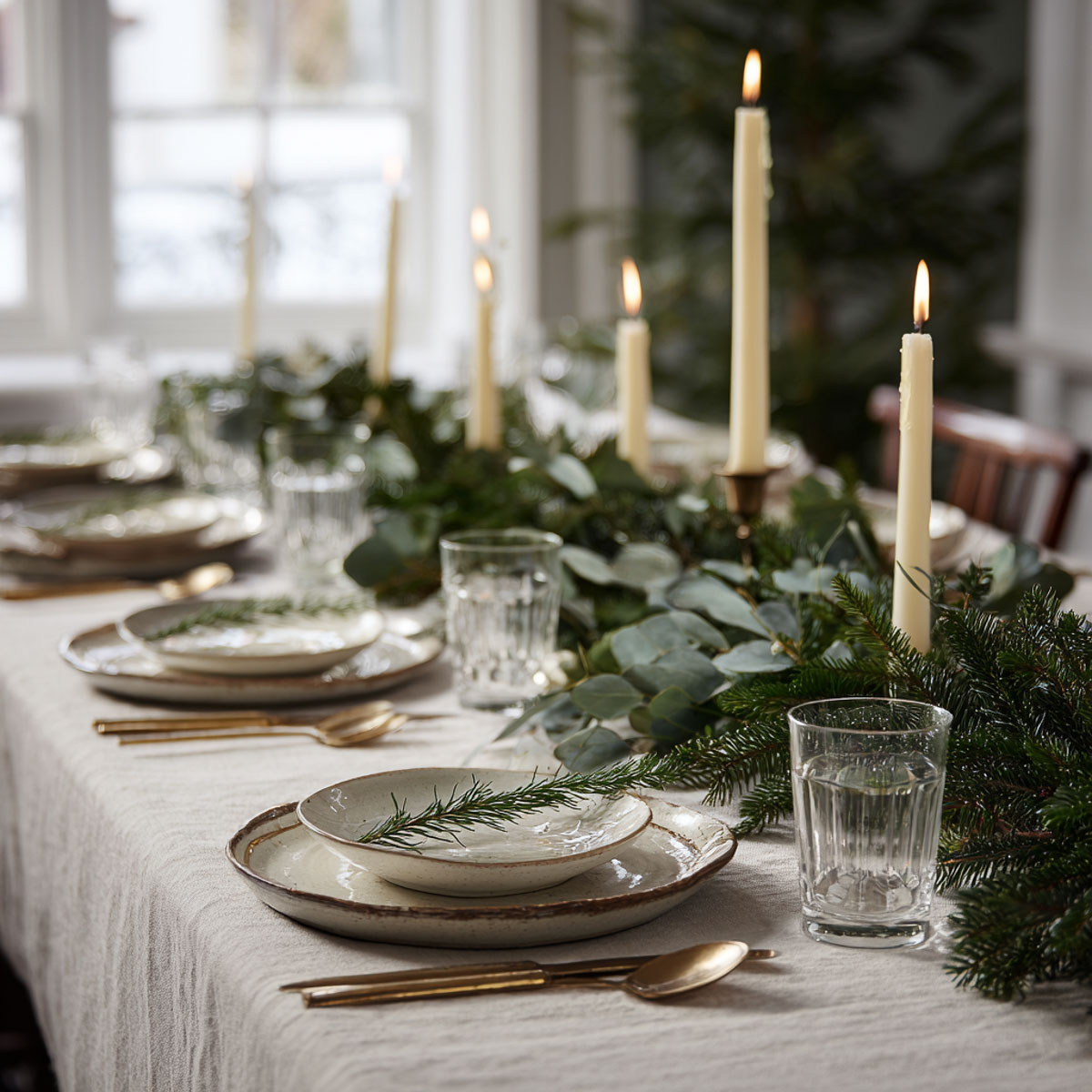
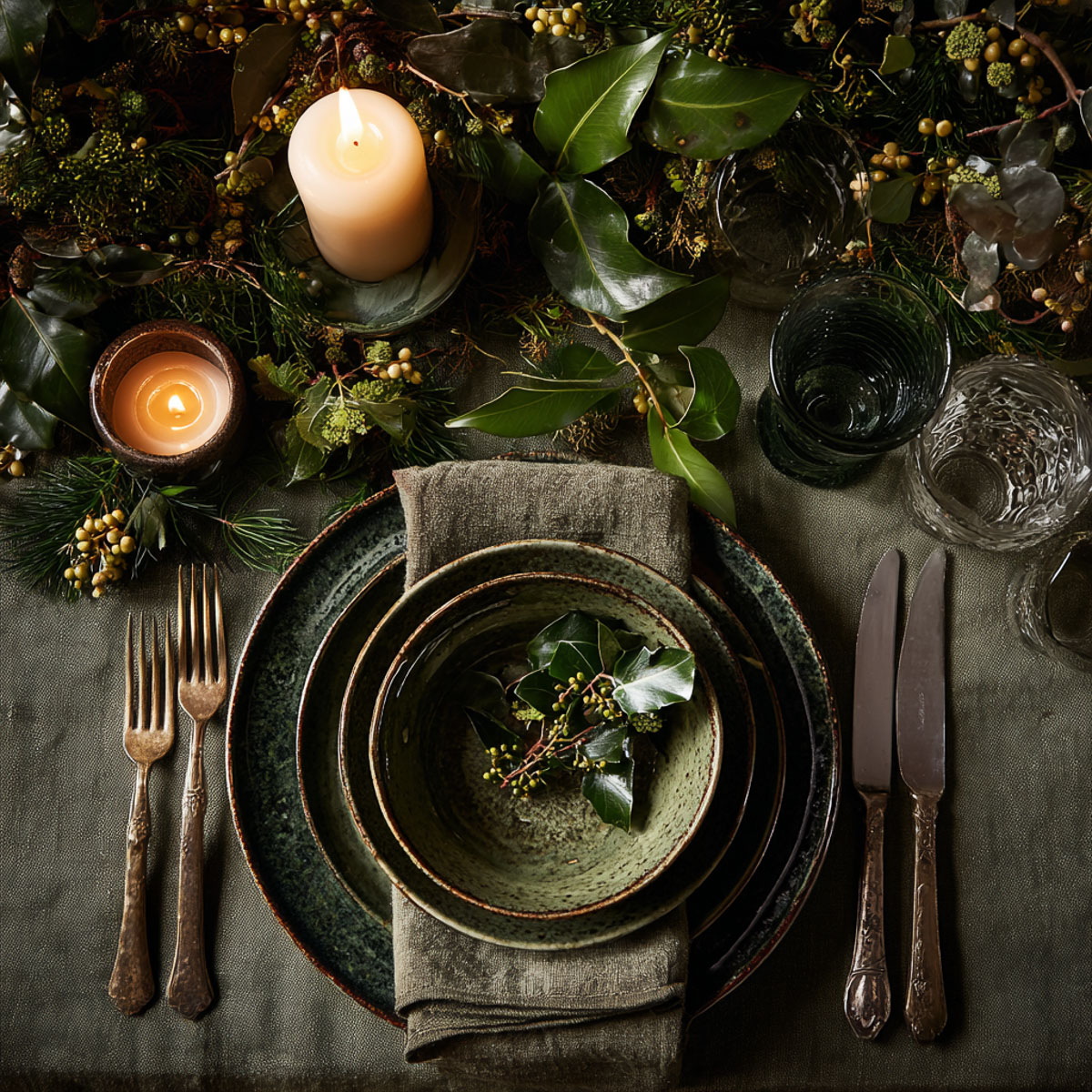
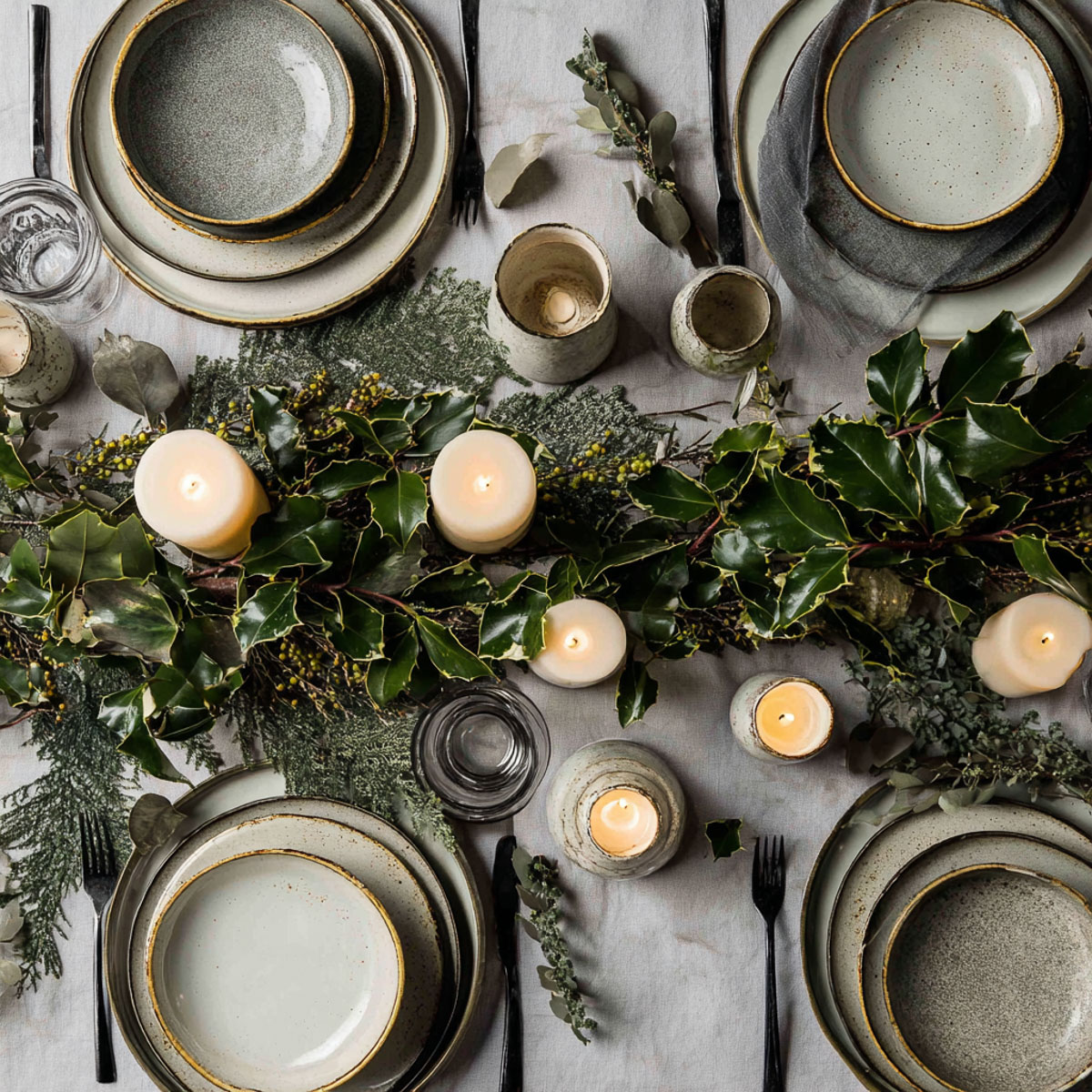
Reds with Warmth and Depth
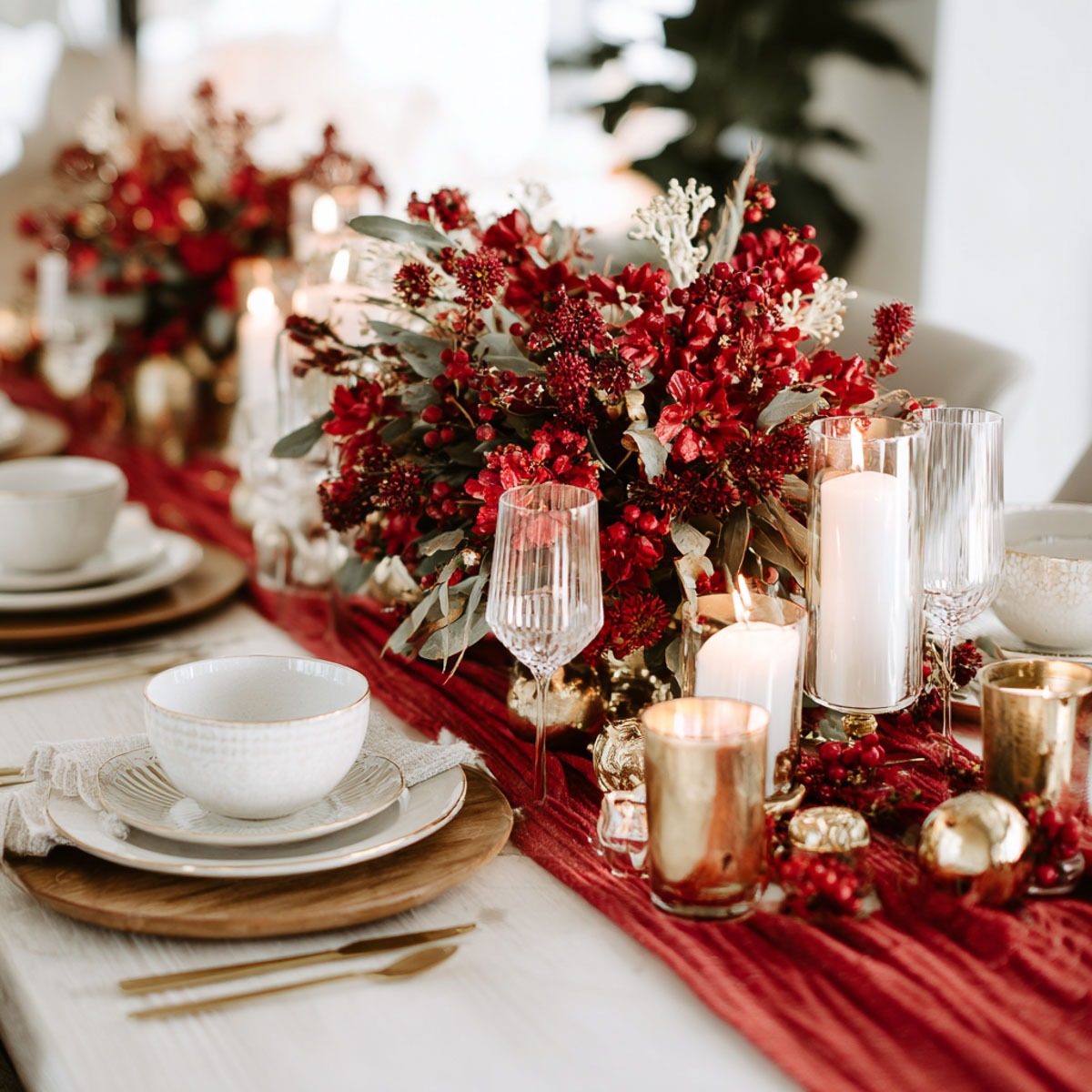
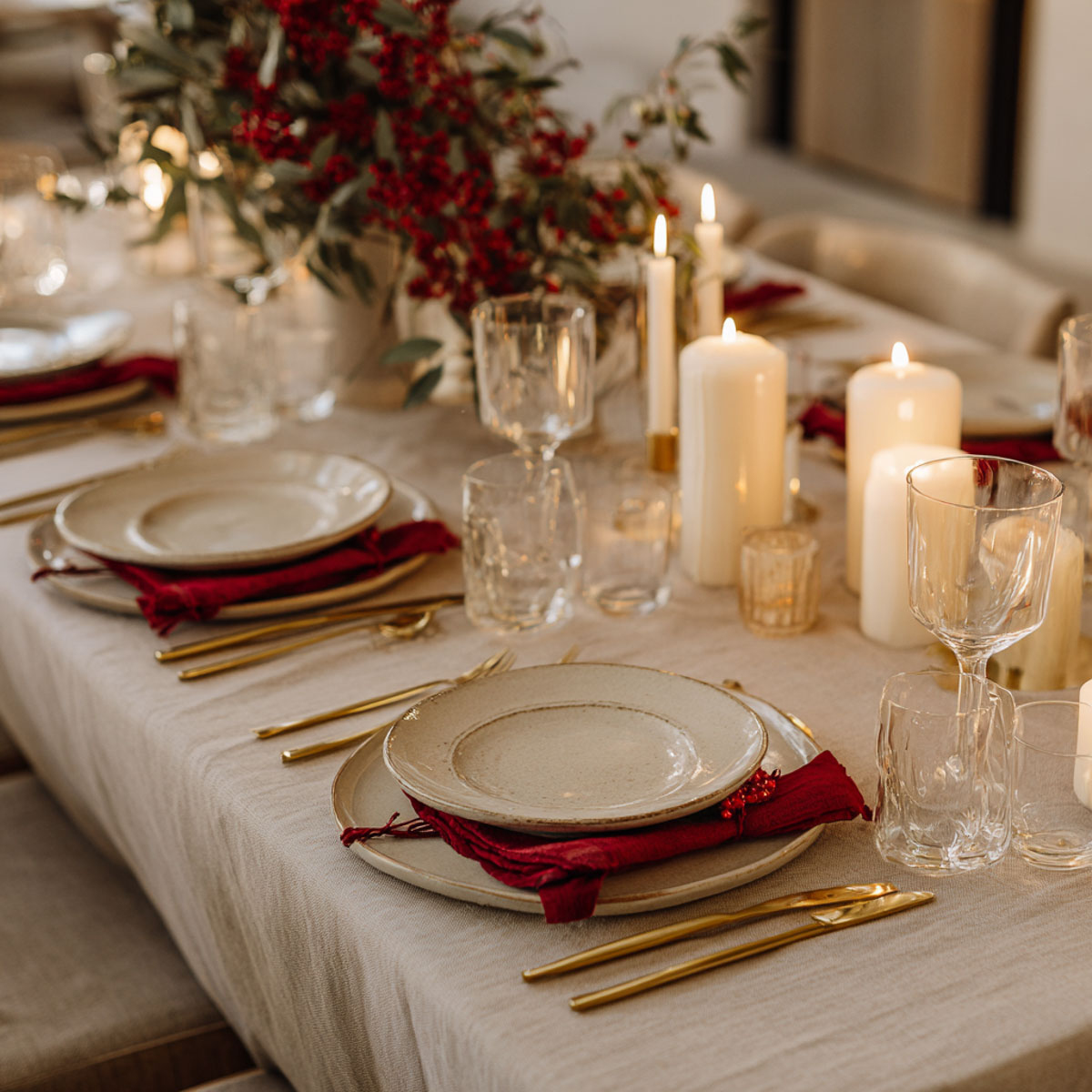
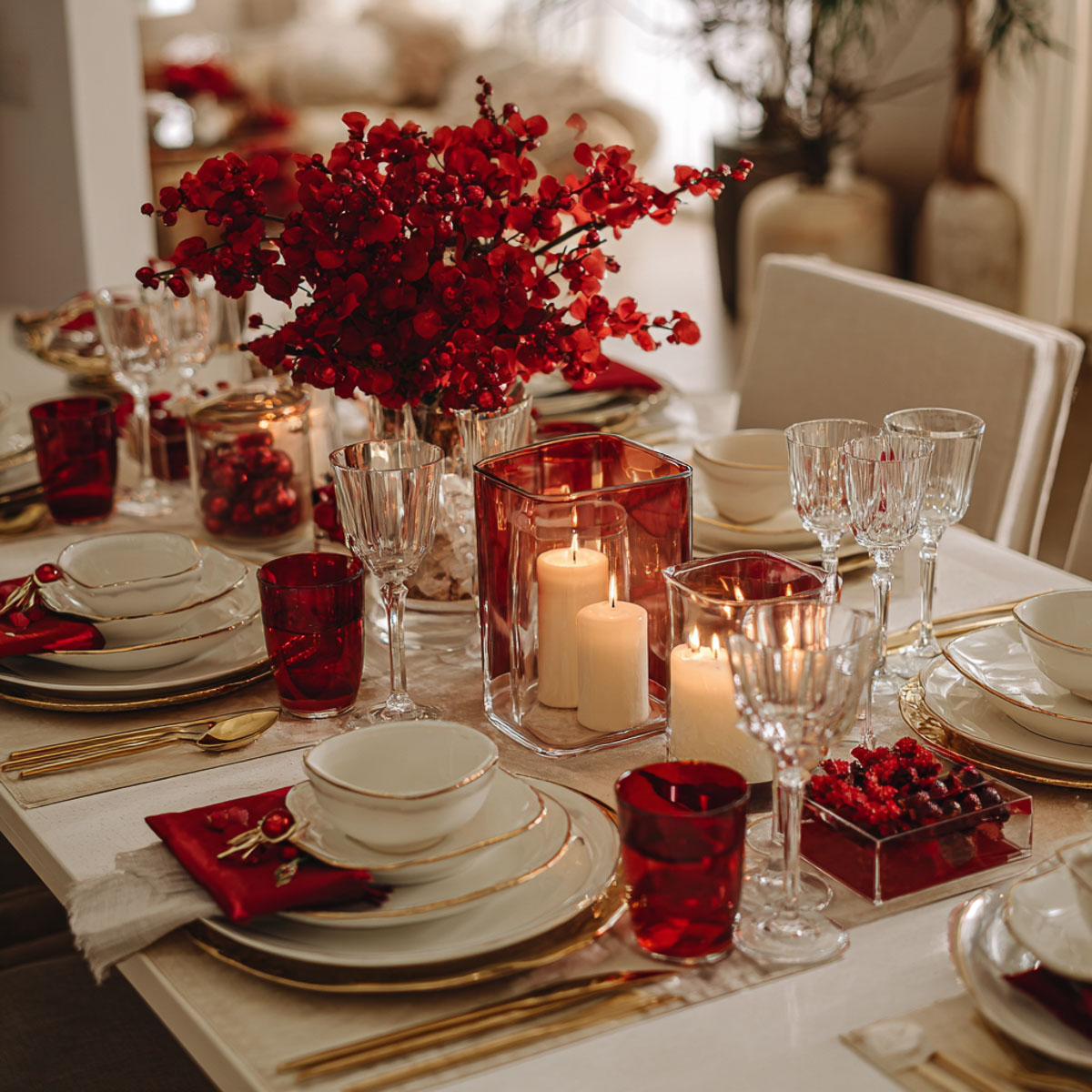
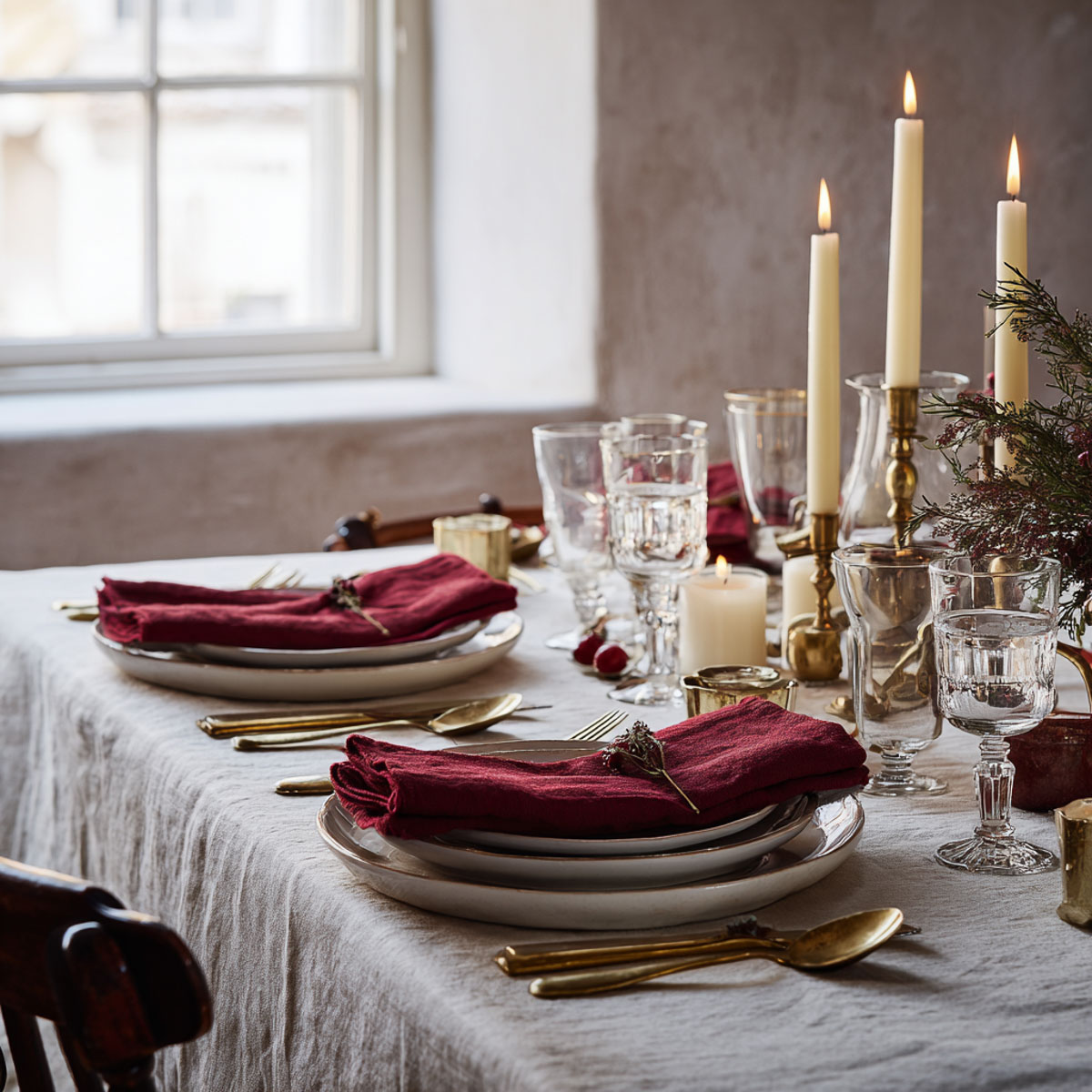
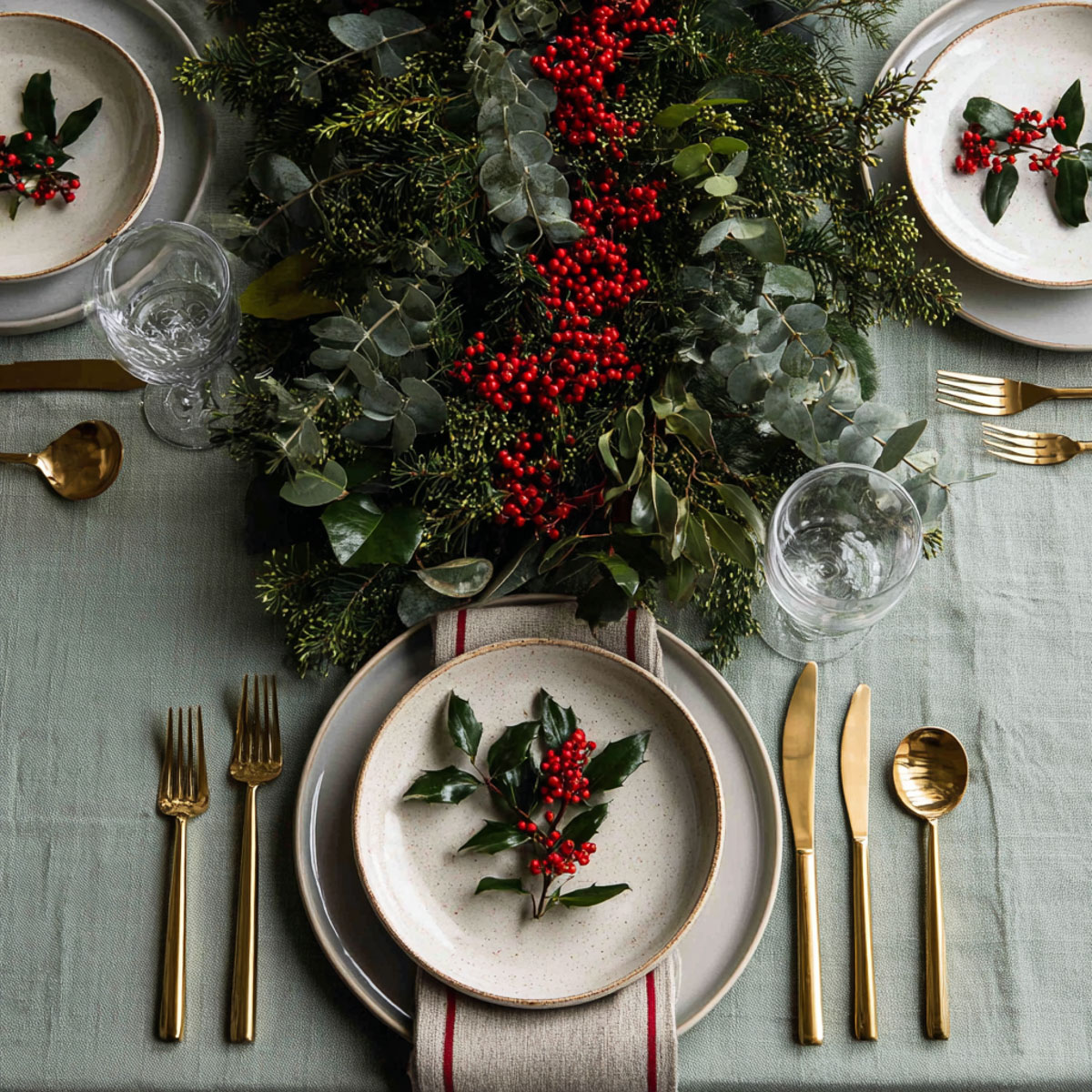
Red can feel rich rather than gaudy if you use it sparingly. Deep crimson napkins, a cluster of berries or a scattering of pomegranates bring warmth to the table without taking over. Gold details suit this palette: brass cutlery, gold-rimmed glasses or a simple candle holder lift the look. Keep plates plain so the colours speak clearly, with one patterned side plate if you like variation. Natural linens and wooden boards steady the palette. Choose candles in red, amber or natural hues to echo the berries; the light should complement the setting, not compete with it.


A Mix of Greens and Reds
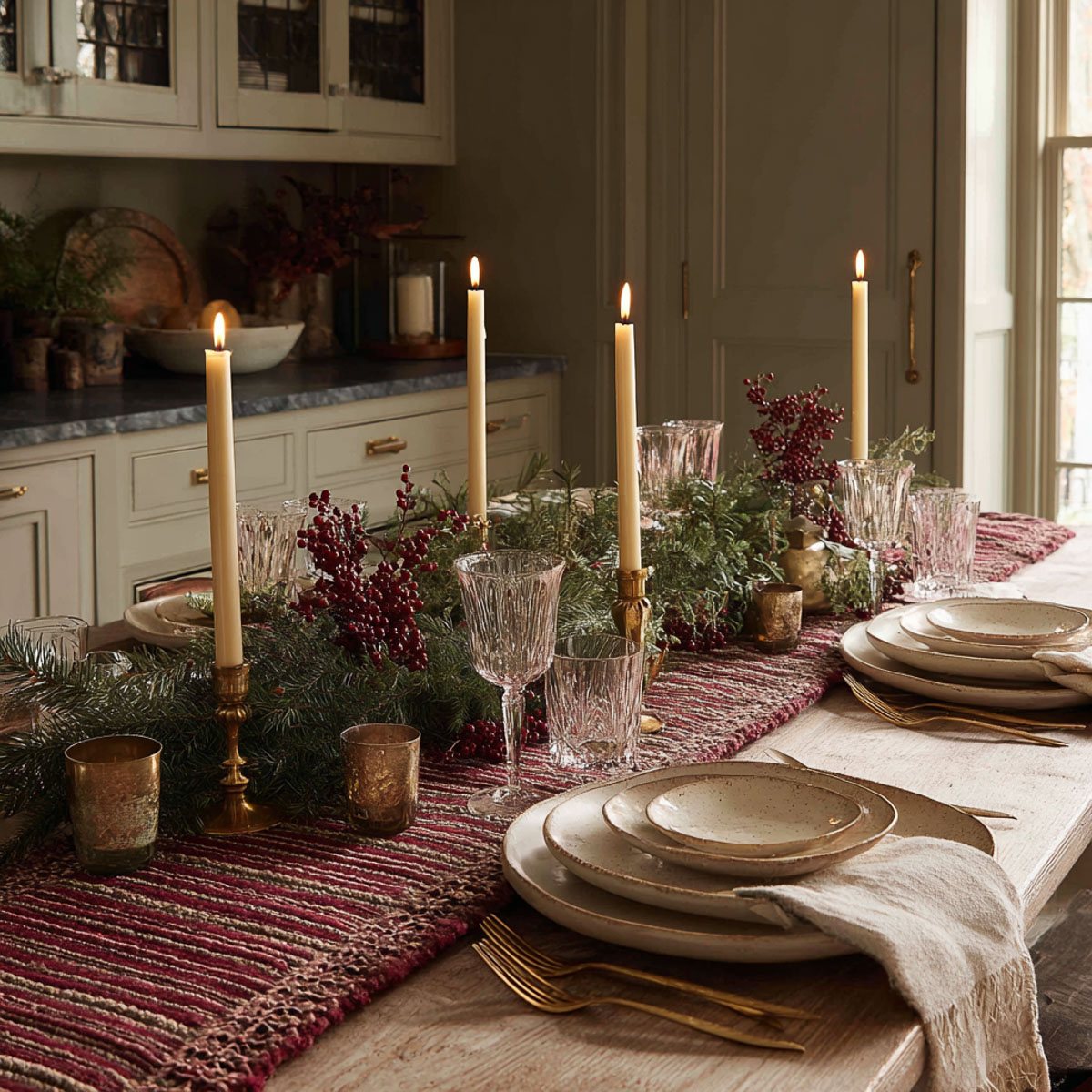
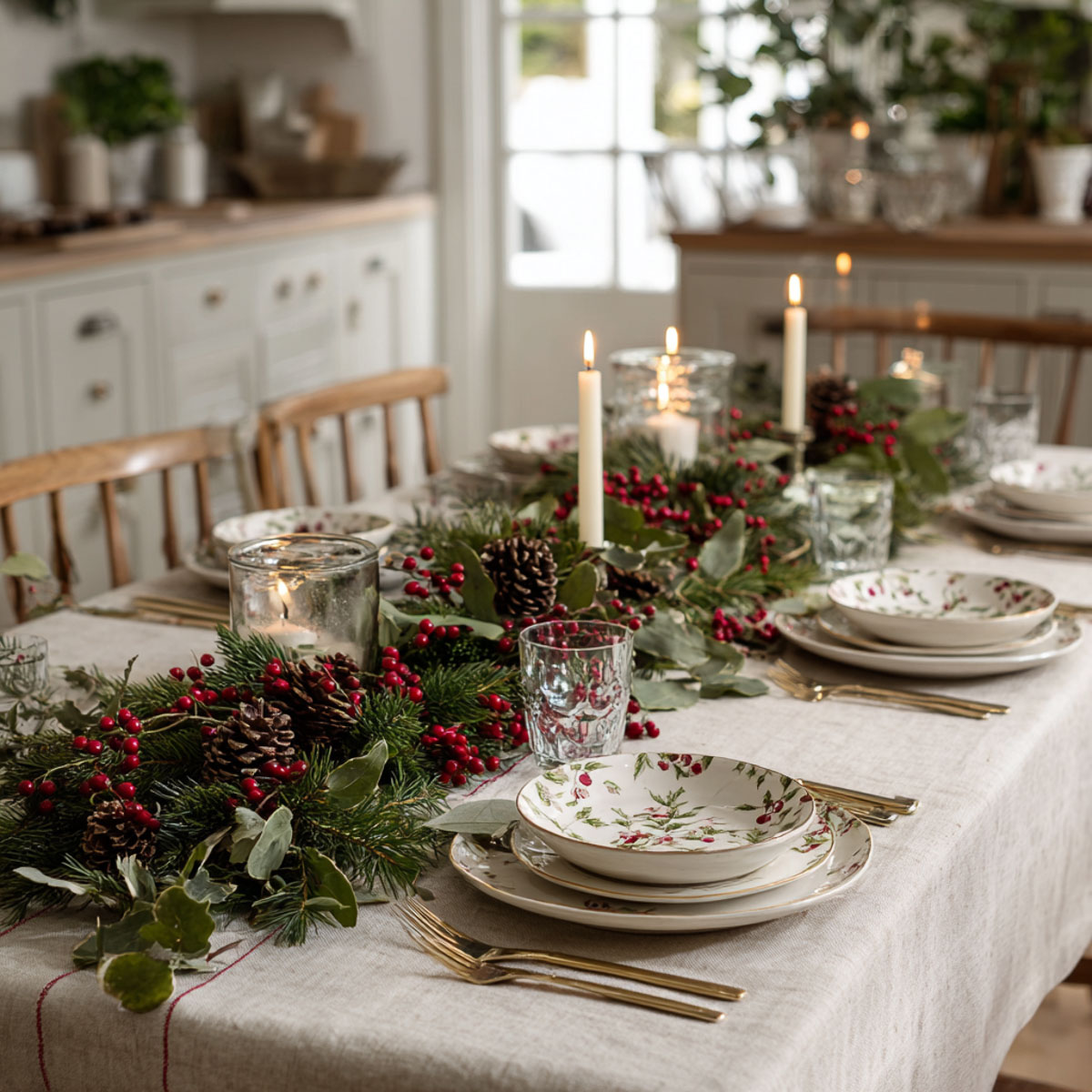
For a classic Christmas combination, let the greenery set the scene and introduce red in smaller ways – a few berries on a fir runner, red napkins or some crab apples. White or cream plates help the colours balance, while gold accents – a rim on a glass, a polished fork, a brass candlestick – add a little glint. Scatter pine cones, walnuts or dried oranges for texture and interest without cluttering the table. Plain candles in off white or soft greige blend in beautifully; simple glass holders keep everything easy to move when dishes arrive.

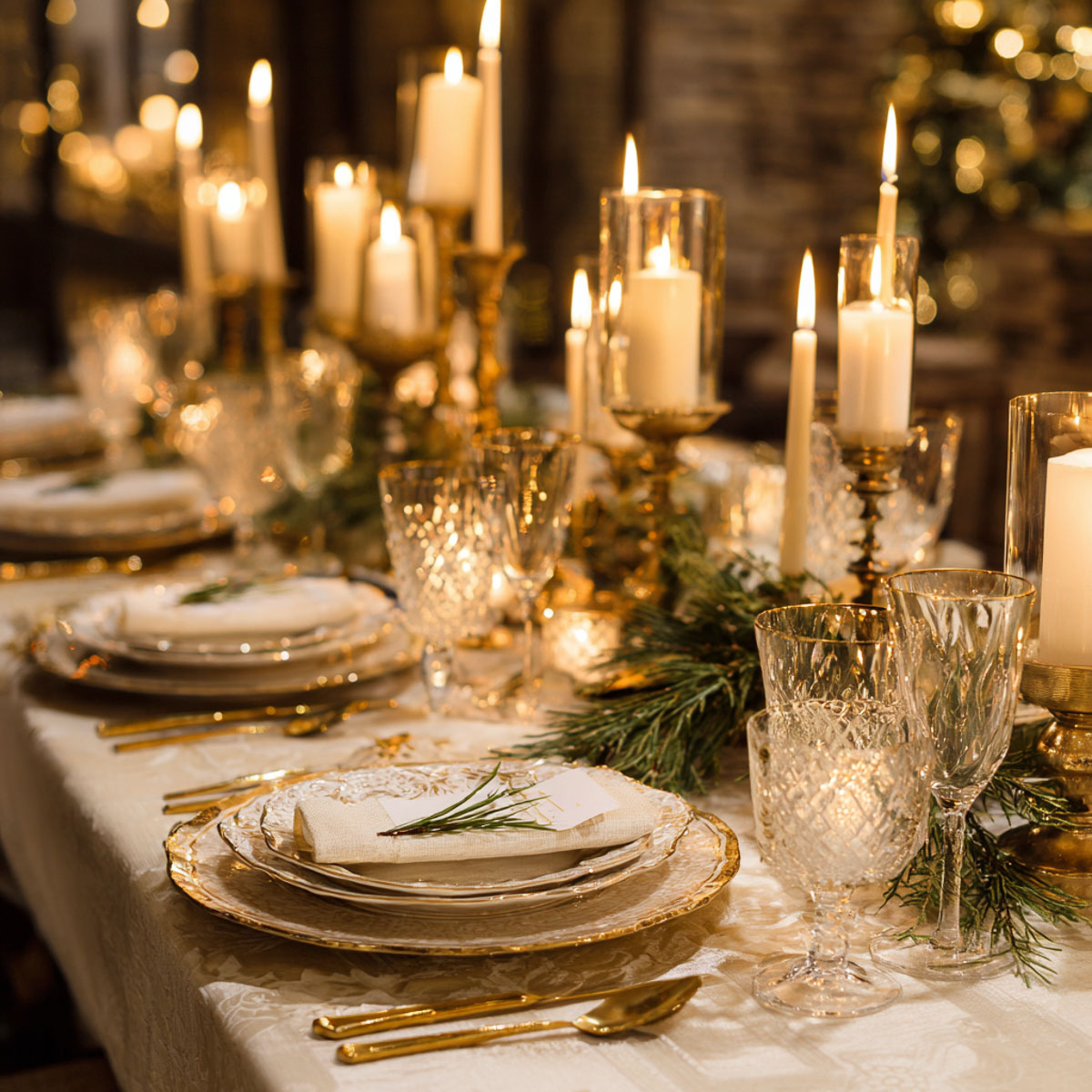
Whites with Gold
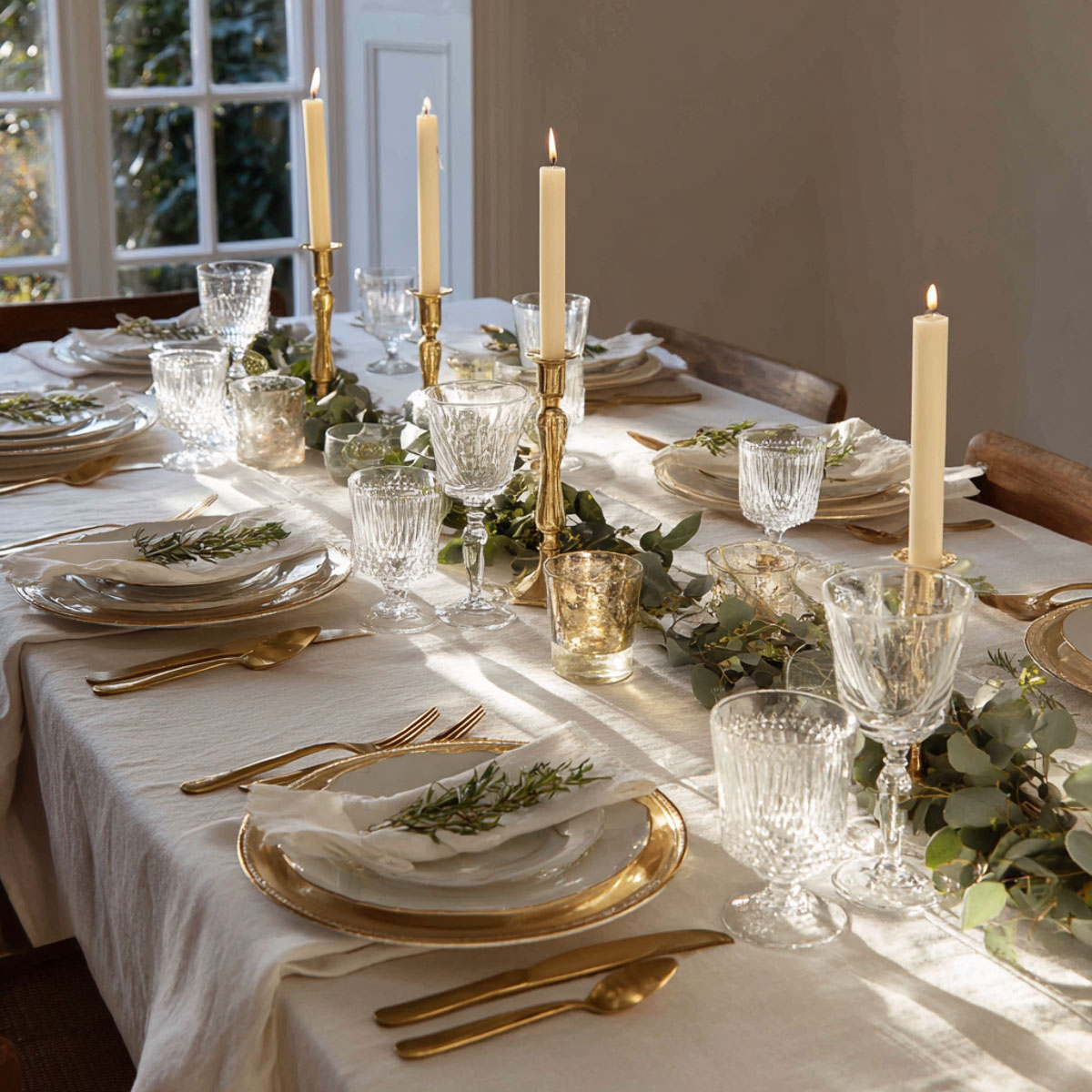
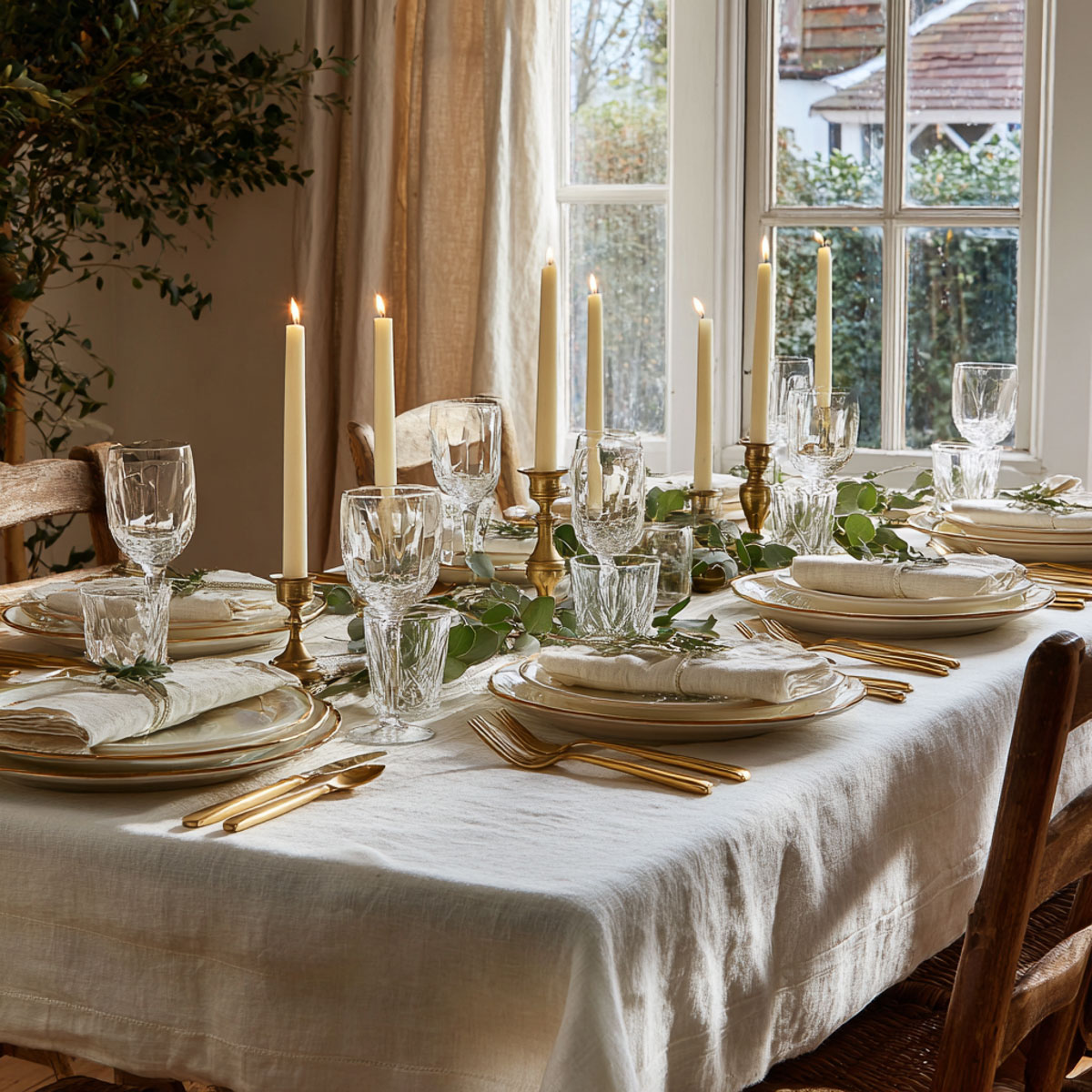
A palette of white and gold creates a calm, structured table. Lay an ivory or linen cloth, set out white plates, then add gold cutlery for warmth. A pair of brass candle sticks or glasses with a gold rim can introduce just enough shine. A few stems of fir or eucalyptus will keep the whole scene from feeling too stark. Choose candles in ivory or warm white to soften the light and maintain the mood.



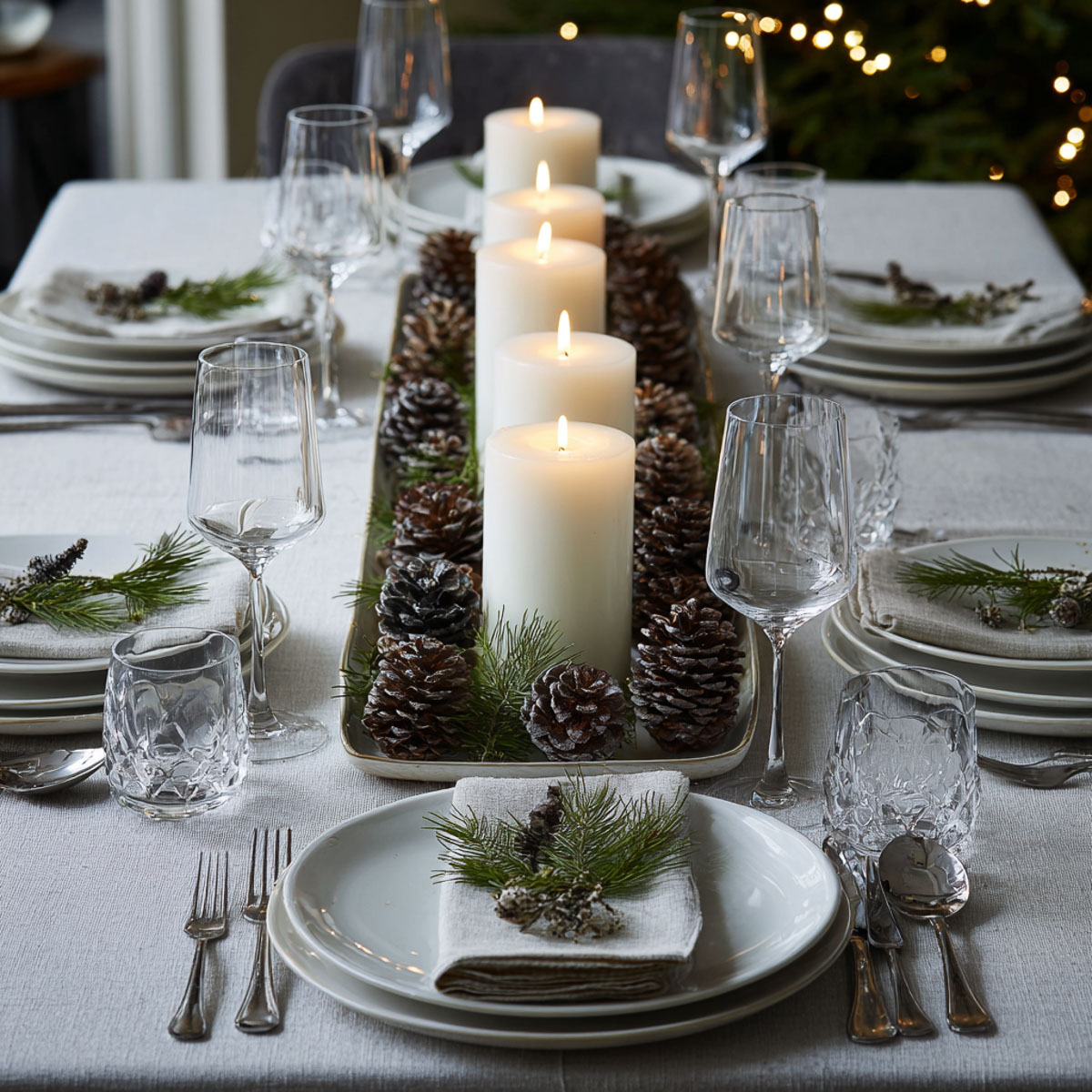
Scandi Neutrals with Silver
For a lighter, pared back mood, look north. Pale linen, white plates and silver or steel cutlery form a clean base. Greens are kept to a minimum – perhaps a few sprigs of eucalyptus, pine or rosemary. A bundle of birch or hazel twigs in a plain vessel adds height without taking over. A short string of fairy lights or a couple of low votive candles provide glow. Stick to matte ceramics and clear glassware, and choose candles in white or soft grey so that nothing jars with the simplicity of the setting.


Hosting Christmas from the kitchen
Most Christmas tables are laid and served from the kitchen, so a kitchen that works for hosting makes the day easier. A larder cupboard keeps platters, glasses and the Christmas china in one place, ready to bring out. For more festive ideas, see our Christmas kitchen decoration ideas.
Our solid wood Shaker kitchens are hand-painted in any Farrow & Ball or Little Greene colour. Browse our project gallery or our pantry and larder cupboards.
Planning a kitchen for 2026?
Talk it through with one of our designers in our Northamptonshire showroom, at home or on a consultation call.
Frequently asked questions
What is Christmas tablescaping?
Christmas tablescaping is arranging the Christmas table as a whole: tablecloth, plates, glasses, cutlery, candles, greenery and decoration chosen to work together in one colour scheme.
What colours work for a Christmas table?
Popular Christmas table colour schemes include natural greens, deep reds, a mix of greens and reds, white with gold, and Scandi neutrals with silver.
What can I use for a Christmas table centrepiece?
A loose line of fir, pine, eucalyptus, holly or ivy down the centre of the table, with candles for height and pine cones, berries or dried oranges for texture.
How do I stop a Christmas table looking cluttered?
Keep plates plain, use one colour scheme, keep greenery low and loose, and use simple candle holders that are easy to move when dishes arrive.
Merry Christmas from all of us at TWKC!
We wish you a Merry Christmas filled with laughter and delightful feasts. Cheers to a festive season that leaves lasting memories for you and your loved ones.