 Bespoke made in 10-12 weeks
  National Installation
  Worldwide Shipping
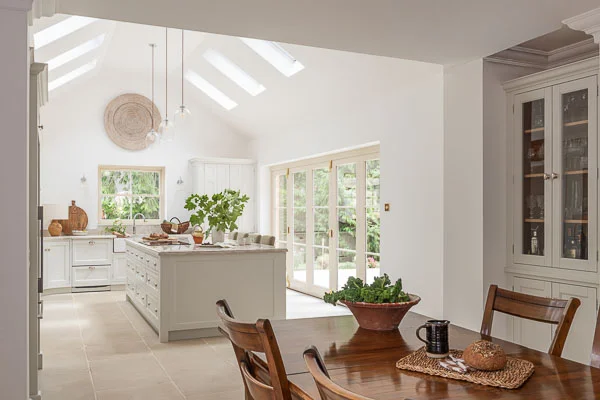
Open-plan kitchens make it easy to cook, eat and spend time together. But when someone needs to work or watch television while dinner is being made, a little separation can help. A broken-plan kitchen gives different parts of the room their own space without closing them off completely.
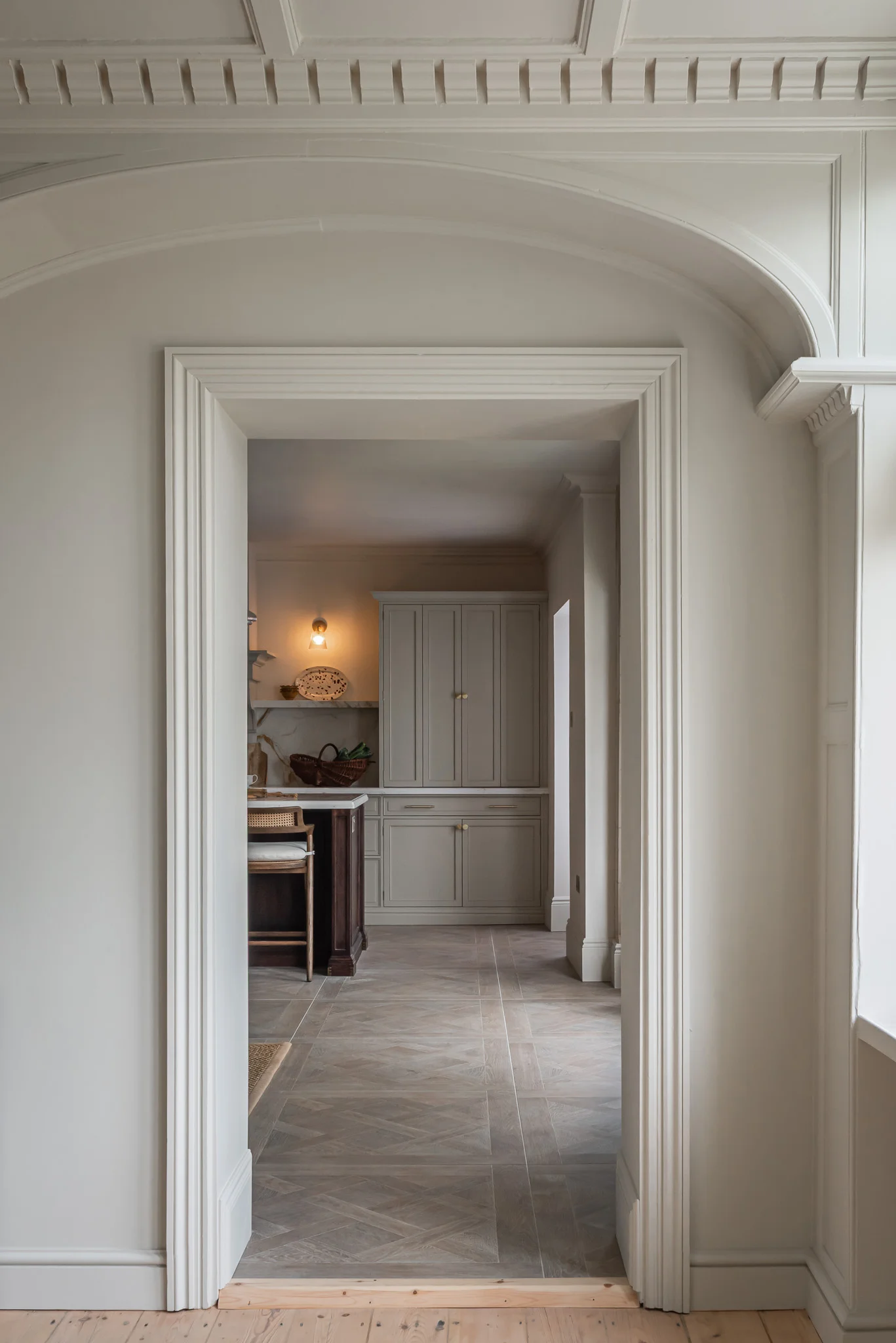
What is a broken-plan kitchen?
A broken-plan kitchen uses partial divisions to separate cooking, dining and sitting areas while keeping them connected. Tall cabinetry, a half-height wall or a glazed screen can create that separation. An island can mark a softer boundary. The amount of privacy depends on the divider you choose.
When does a little separation help?
Open-plan works well when you want a shared space for cooking and family life. It can also bring light into a kitchen that previously felt cut off from the rest of the house.
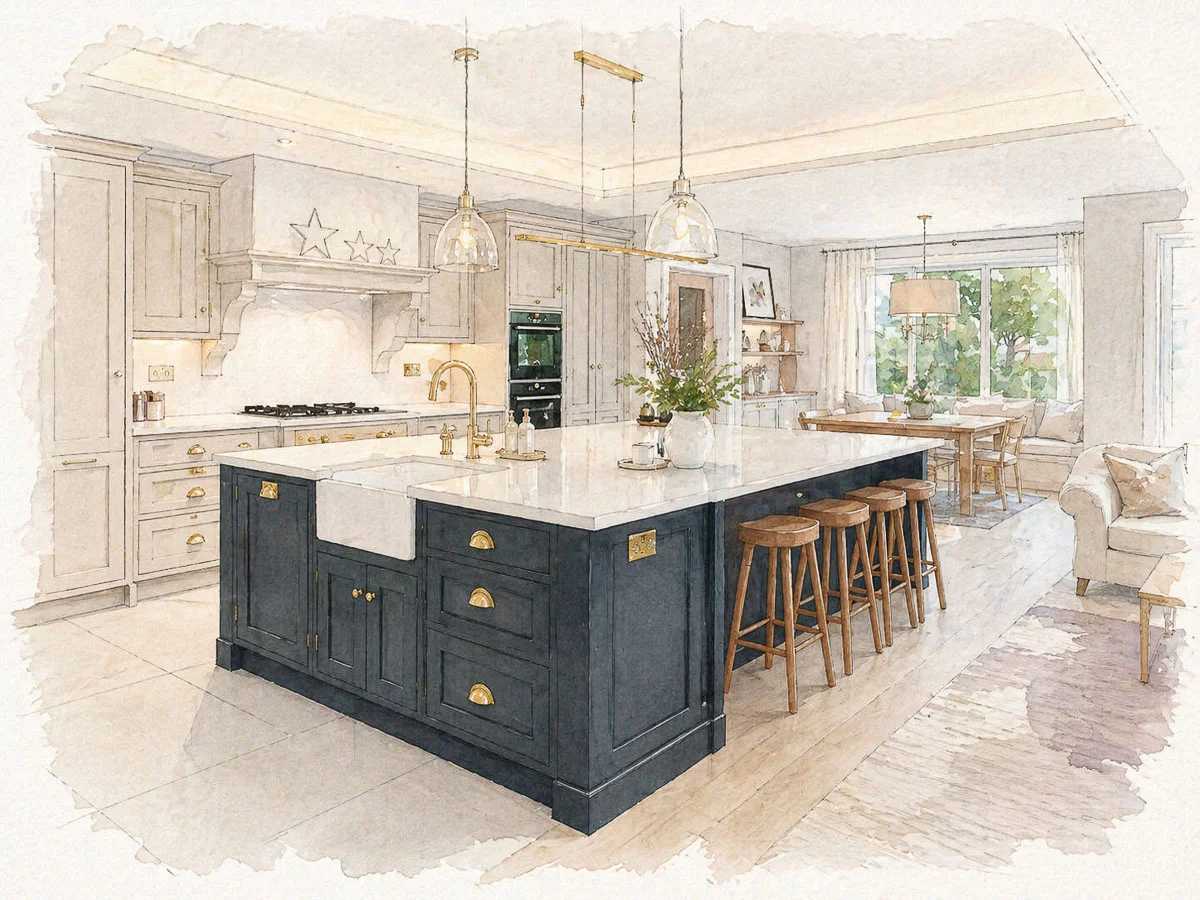
Broken-plan is worth considering when those shared activities start getting in each other’s way. The question is what you need to separate: the view of the kitchen, the route through it, or the noise from cooking.
What is the difference between the layouts?
Open-plan combines the kitchen, dining and sitting areas in one largely uninterrupted room. Semi open-plan often describes adjoining rooms connected by a wide opening. Broken-plan uses cabinetry, glazing or partial walls to define areas within a connected space. The terms overlap; the useful distinction is how much separation the layout gives you.

How to make broken-plan work
Make dividers useful. A tall cabinet can provide kitchen storage on one side and dining storage on the other. An island can combine preparation space with seating. Plan what each side needs to do, rather than adding a divider simply to split the room.


Choose what stays in view. Think about what you want to see from the dining table or sitting area. Position dividers to screen the working kitchen where needed, while keeping views through to windows and adjoining rooms.

Keep the light working. A change in ceiling height can help define the cooking and dining areas. Separate lighting circuits let you keep worktops bright while dimming the lights where people are sitting. Neither requires you to close off the room.


Be clear about noise. Curtains, rugs and upholstered seating can soften echoes from hard surfaces. An island or open shelving mainly creates visual separation; it will not soundproof the kitchen or contain cooking smells. If those are your priorities, consider a division that can close, alongside effective kitchen extraction.

Choosing cabinetry for both sides
In-frame cabinetry can work well between a kitchen and dining area because its framed doors give it a furniture-like appearance. Consider the finish on every visible side, so a dividing cabinet looks as considered from the table as it does from the kitchen.


Different paint colours can distinguish the areas without adding another physical division. A darker cooking area and lighter dining joinery can still feel connected through shared materials and hardware.

When is it better to keep things open?
In a small flat with a galley kitchen, keeping the space open may make better use of the available light and floor area. Equally, a house with separate rooms that already work well may need little change. Avoid adding divisions that narrow walkways or leave one area dark.

Which layout suits your home?
Choose open-plan if you want cooking, eating and relaxing to happen together. Choose broken-plan if you want those activities connected but more clearly separated. If quiet or privacy is essential, decide which parts need to close off rather than relying on visual zoning alone.

Planning your kitchen with us
When you choose The White Kitchen Company for your kitchen, you can work with your own designer on the layout, cabinetry and finishes. Our kitchen design service helps you plan the whole room around how you live.
Book a showroom visit to see our cabinetry and talk through your plans for a new kitchen.
