 Bespoke made in 10-12 weeks
 National Installation
 Worldwide Shipping


To clean kitchen cabinets, cupboards and units, wipe them with a microfibre cloth dampened in warm water, then dry straight away with a second cloth. For greasy marks, add a few drops of mild washing-up liquid, rinse with a plain damp cloth and dry. Avoid bleach, anti-bacterial sprays, abrasive pads and solvents.
Updated November 2026
Looking after a wooden kitchen is more straightforward than people often think. A damp cloth and warm water will handle most day-to-day cleaning. The only other thing worth knowing is which cleaning products to keep well away from the cabinetry.
Why technique matters for hardwood cabinetry
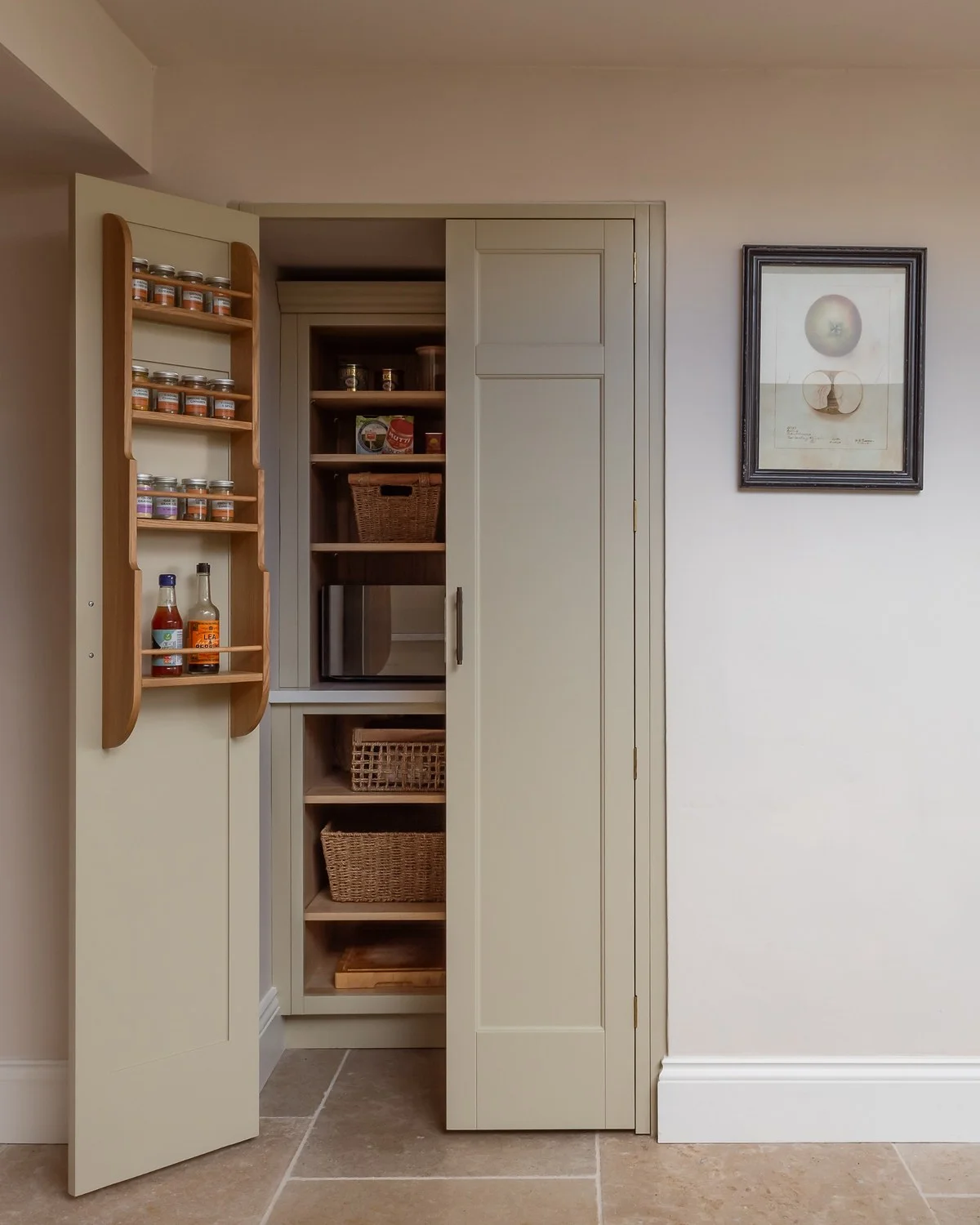
Solid wood, hand-painted in-frame cabinetry has more in common with fine furniture than with mass-market kitchen units. On a TWKC kitchen, the painted exterior is a multi-coat water-based paint system applied by hand, and the interior is finished with a lacquer. Both take the same cleaning method, which is the one we set out below.
The mistake people most often make is reaching for something powerful when something gentle would have worked. Modern kitchen sprays, anti-bacterial wipes, scouring pads and bleach-based products are made for surfaces like worktops and hobs, where they belong. Cabinetry is a different kind of surface and asks for a different kind of cleaning. The everyday method below will handle almost everything that comes up.
The everyday method: warm water and a damp cloth
Take a clean microfibre cloth and dampen it in warm water. There is nothing to be gained from using it hot, so warm is enough. Wring the cloth out so it is just damp rather than wet, with no water dripping from it when you squeeze. Wipe across the surface in light strokes, and then go straight over the same area with a second clean cloth to dry it.
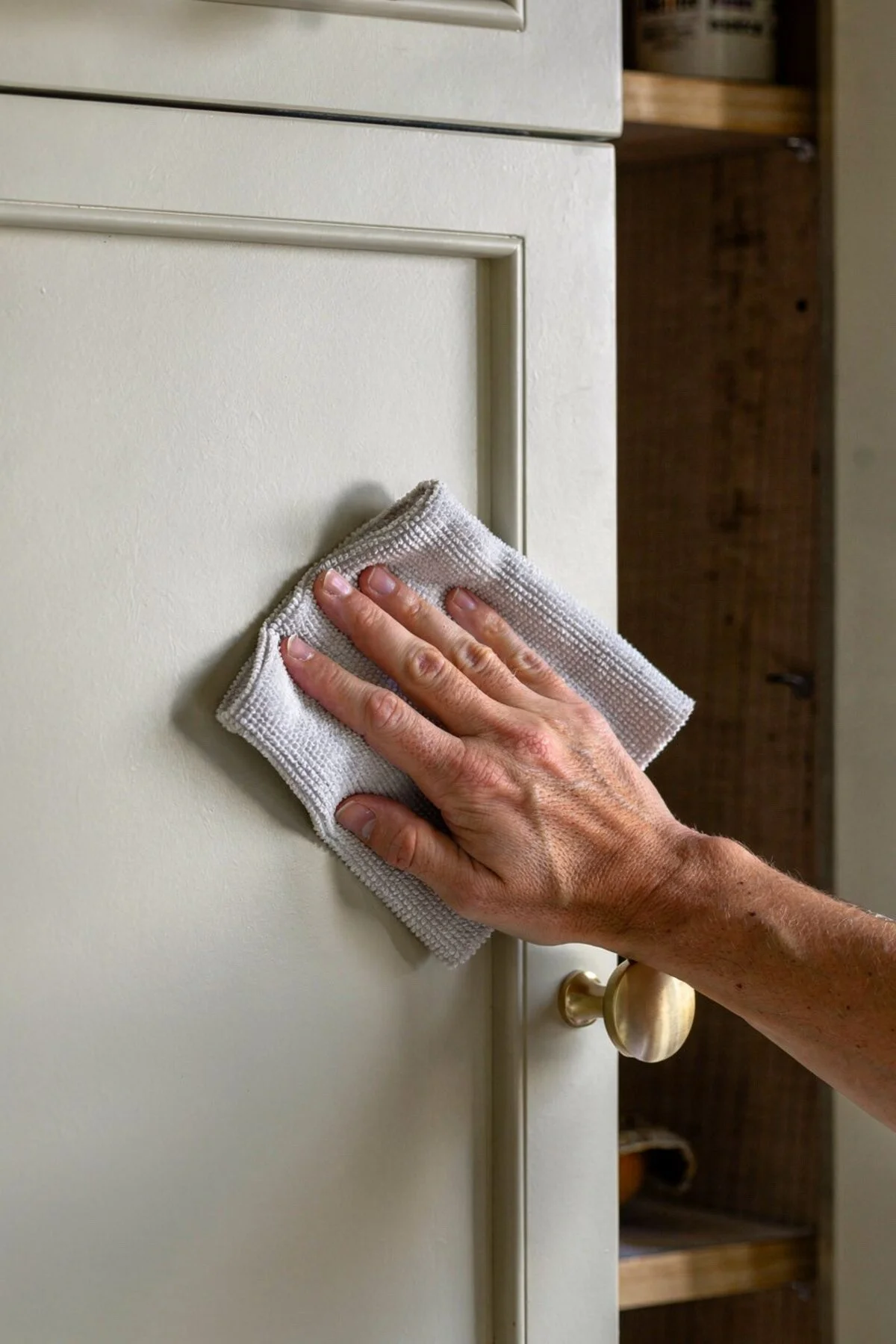
We recommend two cloths rather than one because the first does the cleaning and the second takes off any leftover moisture, so the surface dries cleanly.
Microfibre is the right cloth for the job because it lifts both dirt and moisture without leaving threads or shedding fibres into the detail of an in-frame door. Paper towels are too rough for repeated use and tend to leave fibres caught in beaded edges and mouldings. A regular kitchen sponge holds more water than you need for this kind of cleaning.
This is the method we use throughout a bespoke wooden kitchen.
How to clean kitchen cupboards and units: step by step
Whether you call them cabinets, cupboards or units, the method is the same. Work from the top of the kitchen down, so drips land on areas you have not cleaned yet.
What you need
- Three clean microfibre cloths
- A bowl of warm water
- A few drops of mild washing-up liquid
- A soft, dry brush for beading and mouldings (optional)
The steps
- Wring each cloth out until it is damp, not wet.
- Start with the wall cupboards and the units either side of the hob, where grease collects.
- Wipe doors, frames and drawer fronts in light strokes with the plain damp cloth.
- For marks that stay, switch to the soapy cloth, leave it on the spot for a minute, then wipe.
- Go over the area with a cloth dampened in plain water to lift the soap.
- Dry straight away with the third cloth, paying attention to edges and the joints between door and frame.
- Finish with handles and knobs, which pick up the most fingerprints.
Cleaning inside cupboards
Take everything out, brush or wipe out crumbs with a dry cloth, then use the warm water method on shelves and sides. Let the inside dry fully before you put things back. Two or three times a year is enough for most cupboard interiors.
Cleaning cupboard doors with mouldings or beading
Dust and grease settle in the detail of a panelled or Shaker door. A soft, dry brush lifts dust out of the corners before you wipe. Then follow the profile with a folded damp cloth rather than pressing harder.
When warm water alone is not enough
For marks that warm water will not lift on its own, add a few drops of mild washing-up liquid to the water. A drop or two is enough. Dampen the cloth in the soapy water, wring it out, and wipe the affected area. Then go back over it with a second cloth dampened in plain warm water to lift the soap off, and finish with a third clean cloth to dry the surface.
That makes three cloths in order: soap, rinse, dry. The rinse step lifts the soap so the surface dries without streaks.
If a mark is stubborn, the answer is patience rather than force. Let the damp soapy cloth sit on the spot for a minute or two before wiping, and repeat the soap-rinse-dry sequence if you need to. Some grease and dried-on splashes need two or three passes, but they will lift in the end.
A few drops of mild washing-up liquid in warm water is as strong as a wooden kitchen ever needs. If something is not coming off with this method, the answer is more time and more passes, not a stronger product.
What to avoid, and why
A short list of products belongs nowhere near cabinetry cleaning. Each one reacts with paint or lacquer chemistry in ways that warm soapy water does not.
Bleach, ammonia and other alkaline cleaners. Strong alkaline cleaners react with the chemistry of cabinet paint. Anything containing sodium hypochlorite (bleach), ammonia, or sodium hydroxide (the active ingredient in most oven cleaners) belongs nowhere near painted cabinetry. That includes overspray from cleaning the oven, so cover the cabinets above and either side of the appliance before you start spraying.
Anti-bacterial sprays. Most household anti-bacterial sprays contain a lot of alcohol, usually isopropanol. Alcohol interacts directly with water-based paint finishes. Warm soapy water followed by drying is enough to disinfect cabinetry surfaces, and the anti-bacterial spray belongs on the worktop and the hob rather than the cupboard fronts.

Abrasive cleaners, Magic Erasers and scouring pads. Magic Erasers are melamine foam, which is mildly abrasive at a microscopic level. Cream cleaners, scouring pads, powdered cleaners and rough scrubbing sponges all work in the same way. None of them belong on a satin or matt painted finish, and warm soapy water does the same job without the abrasion.
Strong solvents and degreasers. White spirit, methylated spirit, acetone and nail varnish remover are powerful solvents, and harsh kitchen degreasers fall into the same family. None of them have a place in cabinetry cleaning. Warm soapy water with patience will handle the same jobs without them.
Silicone-based furniture polishes. Spray-on furniture polishes containing silicone are not a cleaning product, but people often use them as one. The silicone leaves a film that builds up over time, attracts dust and makes future cleaning harder than it needs to be. A hand-painted wooden kitchen does not need polishing in the first place.
Vinegar as a regular cleaner. A 50:50 white vinegar and water solution is widely recommended online for cleaning wooden cabinetry. However vinegar is a mild acid, and acid reacts with paint chemistry over time. Occasional, well-diluted use is fine, but we recommend warm soapy water as a better option.
How to clean wooden kitchen cabinets, from doors to drawers
Bespoke wooden cabinetry is made up of several different materials, each with its own finish. The everyday cleaning method is the same throughout, but it helps to know what is under your cloth.
Painted door fronts and frames. The painted exterior of a TWKC kitchen is a four-coat water-based paint system, applied by mechanical spraying and finished by hand. Use the warm water method for routine cleaning, and step up to the soapy version when water alone is not enough. Painted doors pick up most of the fingerprints and cooking splatters in a kitchen, so a weekly wipe is sensible.

Lacquered cabinet interiors and shelves. The carcasses and shelves of a TWKC kitchen are lacquered Paulownia. The lacquer is wipeable and does not need oiling, waxing or any other treatment. For light dust, a dry microfibre cloth is enough. For marks or spills, the warm water method works inside the cabinet too. Just wring the cloth out well first; you want it damp, not wet.
Solid oak drawer boxes. The drawer boxes are made from solid oak, dovetail-jointed, and lacquered. They can be cleaned with a damp cloth in the same way as the cabinet interiors. If a bottle leaks or an item tips over, empty the drawer, wipe it clean, and allow it to dry thoroughly before refilling. Two or three thorough cleans a year, as part of a wider kitchen tidy, are sufficient. All our drawers can be fully removed from their runners for easy cleaning.
Brass hinges and other hardware. TWKC’s solid brass butt hinges are lacquered. Lacquered brass needs nothing more than the occasional wipe with a damp cloth. Brass polish, metal cleaners and abrasive pads are all made for unprotected brass, so they should be kept away from lacquered hardware.
Unlacquered brass, used on some traditional handles and knobs, darkens and patinas with handling, and most owners leave it that way as part of the look. For a brighter finish, an occasional wipe with brass polish on a soft cloth is fine. For any other metal hardware in the kitchen, the same baseline rules apply: damp cloth, dry immediately, no abrasives and no harsh cleaners.
Cabinetry that is looked after lasts a lifetime
A hand-painted wooden kitchen, looked after well, should still look excellent twenty or thirty years after installation. The cleaning method is not what makes the difference. The habit does. Wipe spills as they happen, use the gentle method first and stay with it, and keep the products on the avoid list out of cabinetry cleaning entirely.
A TWKC kitchen is built to be lived in over a lifetime, and we back the cabinetry we install with a lifetime guarantee.
The same cleaning advice applies to every kitchen we make at The White Kitchen Company: solid wood cabinetry with no MDF, hand-painted in any Farrow & Ball or Little Greene colour, so a worn or scuffed area can be touched up or repainted rather than replaced.

Frequently asked questions
How do you clean kitchen cupboards?
Wipe the doors and frames with a microfibre cloth dampened in warm water, then dry with a second cloth. For greasy marks add a few drops of mild washing-up liquid, rinse with a plain damp cloth and dry. Empty and wipe the insides two or three times a year.
How do you clean kitchen units without damaging them?
To clean kitchen units without damaging them, use the gentlest method that works: warm water first, then mild soapy water, always followed by a rinse and a dry. Keep bleach, oven cleaner overspray, alcohol-based sprays, abrasive pads, solvents and silicone polish away from the units.
How often should you clean wooden kitchen cabinets?
A weekly wipe-down of the painted doors with a damp cloth is what we usually recommend. Cabinets above the hob and either side of the cooker tend to need it more often because of cooking splatter. Interiors need only an occasional clean, two or three times a year as part of a wider kitchen tidy.
Can you use washing-up liquid on wooden kitchen cabinets?
Yes, when plain water is not enough, add a few drops of mild washing-up liquid to warm water. Wipe with a soap-dampened cloth, rinse with a plain water cloth, then dry. The rinse step keeps soap from drying on the surface.
Can you use vinegar on wooden cabinets?
Occasionally and well diluted, white vinegar is fine. As a regular cleaning method, vinegar is acid, and warm soapy water does the same job without it.
Can you use bleach on wooden cabinets?
No, bleach and other strong alkaline cleaners react with paint chemistry in ways that warm soapy water does not. Keep them away from cabinetry, and cover cabinet surfaces when cleaning ovens or sinks with bleach-based products.
What is the best cleaner for painted kitchen cabinets?
For everyday cleaning, warm water on a microfibre cloth is enough. When water alone will not lift something, add a few drops of mild washing-up liquid to warm water. There is no specialist product that does the job better on a hand-painted wooden kitchen.
How do you clean grease off wooden cabinets?
Warm soapy water and a little patience will lift grease off wooden cabinets. Apply the damp soapy cloth, let it sit on the grease for a minute, then wipe. Rinse with a plain water cloth, then dry. Heavier grease may need two or three passes, but it will lift; the gentle method works on grease, it just takes time.
How do you clean sticky kitchen cabinets?
Sticky kitchen cabinets are usually caused by grease, sugar from cooking, or a build-up of cleaning product residue. The warm soapy water method with the soap-rinse-dry sequence lifts all three. If silicone polish is the cause, several passes may be needed, and the polish should not be reapplied afterwards.
Are Magic Erasers safe on painted cabinets?
No, Magic Erasers are not safe on painted cabinets. They are melamine foam, abrasive at a microscopic level. They are not appropriate for a satin or matt painted finish, which is what most hand-painted wooden kitchens have.
Thinking about a colour change? See our kitchen colours guide.
Planning a new kitchen?
Talk it through with one of our designers in our Northamptonshire showroom, at home or on a consultation call.