bespoke made symbolBespoke made in 10-12 weeks
national delivery truckNational Installation
worldwide delivery iconWorldwide Shipping
0
Your Cart
0
Your Cart
Julia Currie Photography 100

Choosing Between an Open-Plan and Broken-Plan Kitchen Layout

Anyone who has lived in a large open-plan kitchen knows the drawbacks. Noise travels. Cooking smells spread. One person is on a work call while another is making dinner. The television is on, the extractor is running, and everything happens in the same space at once. For many homes, that is where broken-plan starts to make sense.

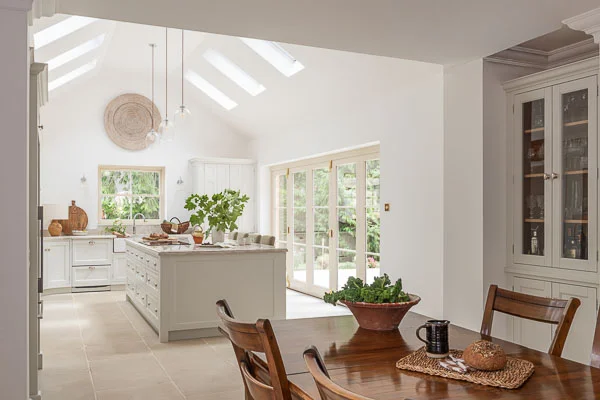
Broken-plan kitchen by The White Kitchen Company, with a tall run of hand-painted in-frame cabinetry separating the cooking area from the dining zone beyond.

What is a broken-plan kitchen?

A broken-plan kitchen keeps the kitchen connected to the rest of the house without making the whole ground floor feel like one room. It might open into a dining area through a wide doorway, with a tall run of cabinetry separating the table from the sitting area beyond. A half-height wall can do the same. So can an island turned sideways to the room, or a glazed screen in the style of Crittall. A double-sided fireplace or an open staircase can also mark the change from one zone to the next without blocking light. The result is a home that still feels open, without every part of it being visible at once.

Why some homeowners are rethinking full open-plan

Open-plan solved a real British problem, and in many houses it still does. In Georgian and Victorian homes, the kitchen often sat at the back of the house, with little light and a weak connection to the rooms people used most. Knocking through made those homes brighter, more sociable and easier to live in. For years, opening up the ground floor was one of the most common aims in kitchen design. The question now is not whether openness matters, but how much openness a house can comfortably carry.

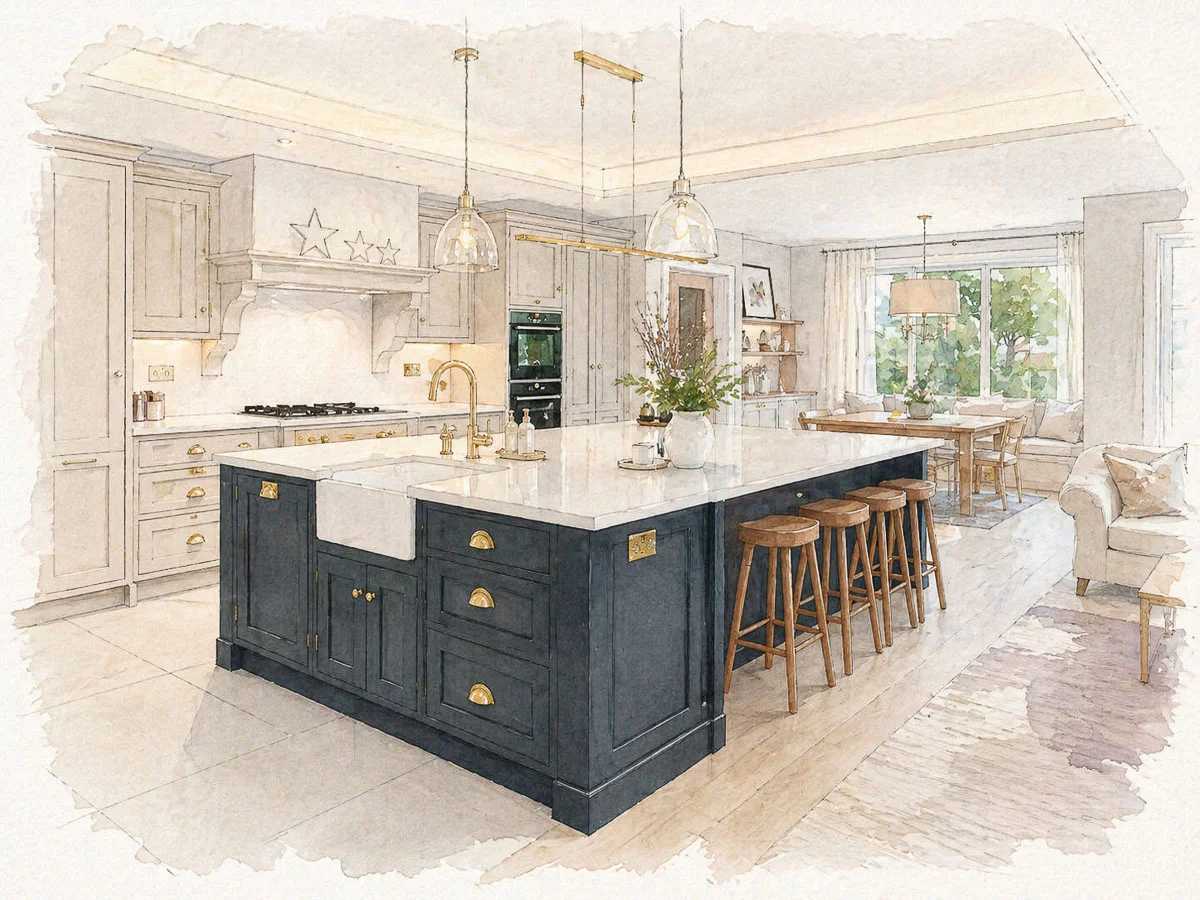
Island used as a soft divider between the cooking and dining zones in a broken-plan kitchen.

That became clearer during the pandemic. Kitchen tables became desks, classrooms and places for supper, often within the same day. A room that worked well for cooking, eating and gathering had to carry work, homework, admin, family life and downtime too. Open-plan still works well when everyone is using the space in a similar way. It works less well when one room has to support several different parts of daily life at once. For many households, that is still a familiar problem.

Since then, the mood has shifted slightly. A new kitchen brief is less often about simply pulling down walls, and more often about giving an open space enough structure to work properly. People still want light, flow and connection. They just do not always want one room doing everything. Broken-plan is not a rejection of open-plan living. It is a more controlled version of it.

Open-plan, semi open-plan, and broken-plan

These layouts are closer than they sound. Open-plan brings the kitchen, dining area, and sitting space into one larger room. Semi open-plan usually means the kitchen is linked to one adjoining room through a wide opening or partial division. Broken-plan treats the ground floor as a series of connected zones rather than one uninterrupted space. What makes it different is how those zones are defined. Joinery, glazing, partial walls, and changes of level do the work that full walls once did.

A side-by-side comparison of open-plan, semi open-plan, and broken-plan kitchen layouts.

How to design a broken-plan kitchen well

Zoning. The best dividers do a job on both sides. A tall cabinet might provide kitchen storage on one face and dining storage on the other. An island can work as a prep space from one direction and informal seating from the other. A half-wall might carry storage or lighting while also helping to define the room. In a broken-plan kitchen, dividers need to do more than divide. If they only split the room, they feel like walls. If they add storage, seating or display space, they feel more like furniture.

Tall in-frame cabinetry acting as a zone divider in a broken-plan kitchen by The White Kitchen Company.

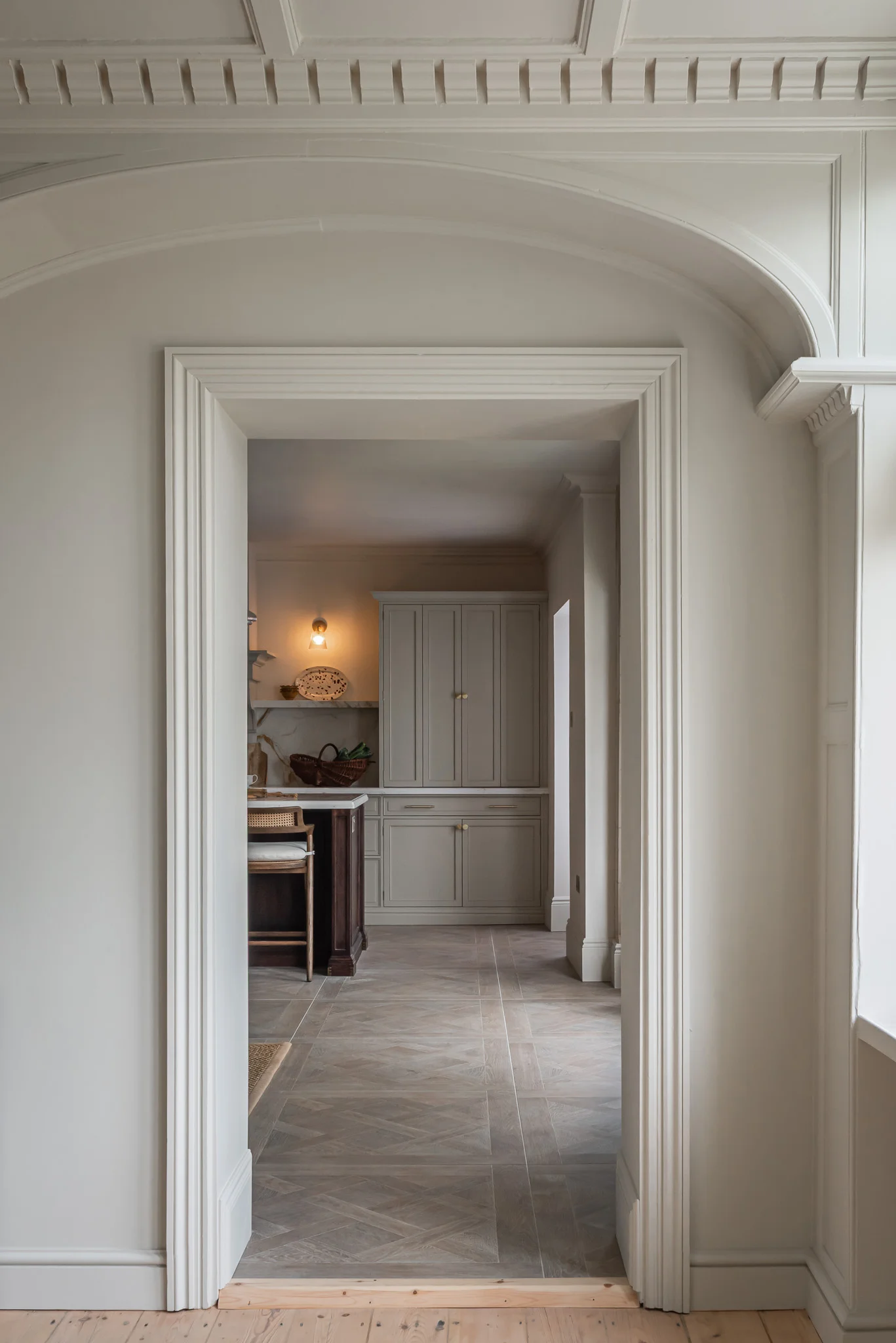
Sightlines. The aim is to stop the eye landing on everything at once. From the sink, the kitchen does not need to look straight through to the sitting area. That is different from sealing one room off from the next. Light should still move between the zones. People should still be able to talk across the space and feel connected. The aim is layers, not barriers.

Layered sightlines in a broken-plan kitchen, with cabinetry framing the view between cooking and sitting zones.

Light. Broken-plan makes it easier for the lighting to shift from one zone to another without the whole space feeling disjointed. A pitched roof over the cooking area and a flat ceiling over the dining area can make the two parts of the room read differently without adding a full wall. Separate lighting circuits help too. The cooking zone can stay bright while the seating area is lit more softly at the end of the evening.

Broken-plan kitchen by The White Kitchen Company, showing a change in ceiling height between the cooking and dining zones.

Acoustics. Noise is one of the first things people notice after living in a fully open-plan kitchen for a while. Hard floors, glazed extensions, and high ceilings can all make a room more echoey. Curtains help. Rugs help. An upholstered banquette in the dining area is doing acoustic work even if nobody specifies it as an acoustic product. Broken-plan can help further by interrupting the direct path of sound from one area to the next. It does not remove the need for softer materials, but it can take the edge off.

Bespoke banquette seating area alongside Shaker cabinetry with reclaimed oak flooring with a view towards the boot room

Choosing materials and cabinetry

In-frame cabinetry often suits a broken-plan layout particularly well. The visible frame around each door helps the cabinets read more like individual pieces of furniture than one continuous run. That matters when a cabinet is dividing zones and needs to sit comfortably in the dining area or snug as well as in the kitchen. Hand-painted finishes can strengthen that effect, especially when the cabinetry is helping to give each part of the room its own identity.

Paint can help with zoning too. A darker shade on the cabinetry in the cooking area and a lighter one on the joinery in the dining zone can create a boundary the eye notices before it notices there is no wall.

Hand-painted in-frame cabinetry used to zone a broken-plan kitchen by The White Kitchen Company, with a darker shade in the cooking area and a lighter shade on the dining joinery.

When broken-plan is not the right answer

Broken-plan is not right for every home. In a small flat with one reception room and a galley kitchen, full openness can make better use of the limited space and borrowed light. A larger house that already has a run of well-proportioned separate rooms may not need the approach at all. The honest question is whether the layout has too few separations or too many. Broken-plan only makes sense when the answer is too few.

A galley kitchen where full openness makes better use of limited space and borrowed light.

A final thought

Broken-plan is not a style trend so much as a more careful way of organising space. It keeps what people still value in open-plan living, which is light, connection, and flow, while answering some of the things that can make a large open room harder to live with. In some houses it is exactly the right answer. In others, it is not needed at all. What matters is choosing the layout that suits the house and the way it is used.

Broken-plan kitchen layouts with connected cooking, dining and sitting zones.

Frequently asked questions

What is a broken-plan kitchen?

It is a kitchen that stays connected to the surrounding rooms without turning them all into one continuous space. Partial walls, wide openings, cabinetry, glazing, and changes of level divide the ground floor into zones that still feel part of the same home.

Is broken-plan the same as semi open-plan?

Not quite. Semi open-plan usually describes a kitchen linked to one adjoining room through a wide opening. Broken-plan tends to think about the whole ground floor more deliberately, with divisions built into the layout and joinery.

Are open-plan kitchens going out of style?

No. Open-plan still suits many homes very well. What has changed is that more people now question whether it is right for every brief. In some houses, broken-plan offers a more comfortable balance between openness and separation.

Does broken-plan work in a smaller house?

Sometimes, but it needs care. In smaller homes, too much division can make the layout feel meaner rather than better. Broken-plan tends to work best where there is enough room for the zones to feel useful rather than cramped.

SHARE:
BOOK APPOINTMENT