 Bespoke made in 10-12 weeks
 National Installation
 Worldwide Shipping

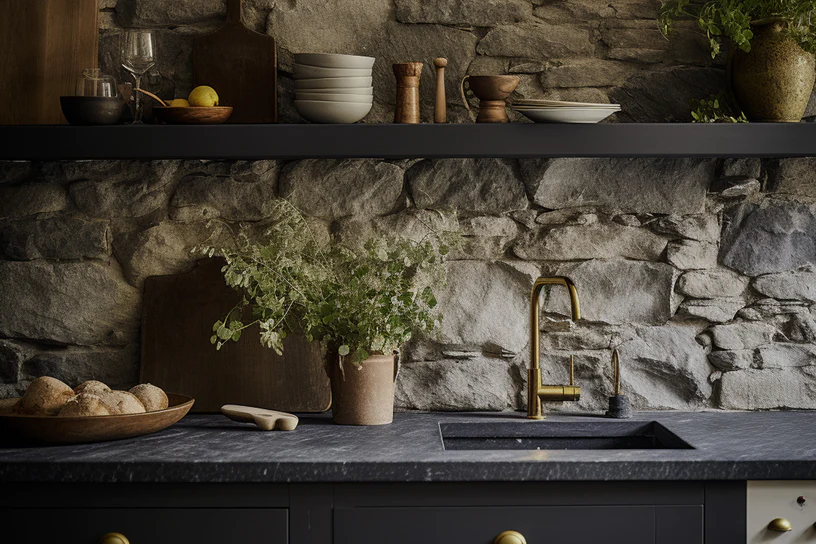
The main kitchen splashback (backsplash) trends are full-height natural stone with strong veining, a “countersplash” in the same material as the worktop, patterned and geometric tiles, monochrome schemes, bold colour, warm earthy neutrals, mixed materials and carved 3D detail. Choose one that is easy to wipe behind the hob and sink, and that suits your cabinetry colour.
Updated November 2026
Splashback is the usual word in the UK; backsplash is the American term. Both mean the protective wall surface behind the worktop, hob and sink.
Many people now look for longer-lasting, lower-impact materials, such as recycled-content tiles, composite slabs and stone chosen to last the life of the kitchen.
Kitchen splashback ideas and trends
Dramatic Stone
Stone slabs are taking centre stage in kitchen backsplashes. The raw beauty of natural stone, with dramatic veining and rich colours, is a favourite choice among designers. Whether it’s striking marble or captivating onyx, stone slabs add a touch of luxury to your kitchen.
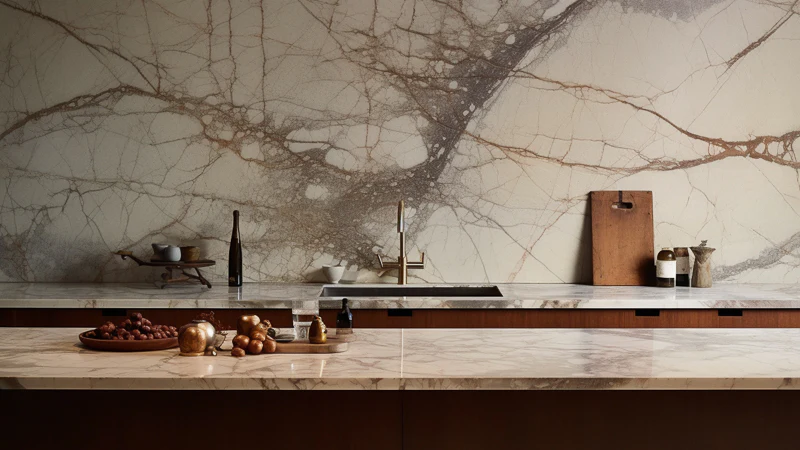
Countersplash
The trend of using the same material for both the countertop and backsplash is going mainstream. This approach adds continuity and a modern touch to any kitchen style, giving it a clean and cohesive look.

Geometric Focal Point
Geometric patterns are making their way into kitchen design, creating a wow factor and sparking the viewer’s imagination. These patterns add a touch of modern Art Deco to the kitchen, offering a unique visual experience.

Patterned Tiles
Patterned tiles are a versatile choice for backsplashes, whether you have an all-white kitchen or colourful cabinetry. They can inject a sense of playfulness and intricacy into the space.

Monochromatic Palettes
Monochromatic colour schemes are gaining traction in kitchen design. These schemes, featuring varying tones of a single colour, create a cohesive and spacious look, whether you opt for charcoal grey or crisp white.

Bold and Vibrant Hues
For those looking to make a statement, bold and vibrant colours like bright blues, vivid greens, and energizing yellows are an excellent choice. These colours infuse the kitchen with personality and vitality.

Neutral Tones
Warm, earthy neutrals like beige, taupe, and soft terracotta are in vogue. These colours provide a calm and inviting backdrop for your kitchen and complement the trend toward sustainable design.

Mixed Materials
Unconventional backsplashes that incorporate a mix of materials are gaining popularity. From mirrored glass tiles to combining dark grey with textured glass, designers are finding creative ways to use mixed materials to add a special element to kitchen walls.
3D Details
3D details can make a big difference in kitchen design. Carved detailing in materials like Caesarstone slabs is being used to add depth and character to backsplashes, offering a subtle yet impactful design element.

Moulded Stone Composite Slabs
Moulded stone composite slabs offer eco-friendly, versatile, and low-maintenance solutions for kitchens, seamlessly blending durability and aesthetics for a stylish and sustainable design.

How to choose a kitchen splashback
Think about where it goes
Behind the hob you need something heat-resistant and easy to wipe, such as stone, composite, glass or glazed tiles. Behind the sink it must cope with water. Elsewhere you have more freedom.
Decide on the height
A low upstand of 100–150mm protects the wall behind the worktop. Taking the splashback up to the wall cupboards, or the full height of the wall, makes it a feature.
Match it to your cabinetry
A busy marble or patterned tile suits plain, painted doors; a quiet splashback lets a strong cabinet colour lead. We hand-paint our painted kitchens in any Farrow & Ball or Little Greene colour, so bring a tile or stone sample to your design meeting and we can choose the colour together.
The White Kitchen Company’s kitchens are solid wood with no MDF, hand-painted to suit your splashback, made in 10–12 weeks and delivered fully assembled. Cabinetry starts from £1,180 per metre including painting and VAT, and complete kitchens start from £11,808.
Grout and upkeep
Large slabs have few joints and are the easiest to keep clean. Small tiles look lovely but have more grout lines to wipe.
Whatever you choose, a splashback should suit the kitchen for years rather than one season. For the bigger picture on what is changing in kitchens, see our kitchen trends guide, or browse finished kitchens in our project gallery.
Frequently asked questions
What is the difference between a splashback and a backsplash?
There is no difference between a splashback and a backsplash apart from the word. Splashback is the usual UK term; backsplash is American. Both are the protective wall surface behind the worktop, hob and sink.
What are the latest kitchen splashback trends?
The latest kitchen splashback trends are full-height natural stone with strong veining, worktop-matching countersplashes, patterned and geometric tiles, monochrome and bold-colour schemes, warm neutrals, mixed materials and carved 3D detail.
What is a countersplash?
A countersplash is a splashback made from the same material as the worktop, so stone or composite runs from the counter up the wall without a change of material.
What is the easiest splashback to keep clean?
The easiest splashback to keep clean is a large slab of stone, composite or glass, because it has few or no grout lines. Small tiles have more joints to clean.
How high should a kitchen splashback be?
A kitchen splashback can be a low upstand of 100–150mm, which protects the wall behind the worktop; many people take it up to the wall cupboards or the full wall height behind the hob for impact.
To see what painted solid wood cabinetry costs, look at our kitchen prices.
Planning a new kitchen?
Talk it through with one of our designers in our Northamptonshire showroom, at home or on a consultation call.