 Bespoke made in 10-12 weeks
 National Installation
 Worldwide Shipping


To design a kitchen for a high ceiling, take tall cabinets close to the ceiling and finish them with a cornice, layer your lighting at different heights, and add detail overhead with beams, coving or a darker ceiling colour. Soft furnishings and a larger island stop a tall room feeling cold, echoey or empty.
Updated November 2026
High ceiling kitchens can create an open, airy feel, adding a sense of grandeur to the space. However, designing a kitchen with high ceilings requires careful planning to ensure functionality, warmth, and visual harmony. Here’s a guide on how to design an efficient and stylish kitchen that makes the most of those high ceilings.
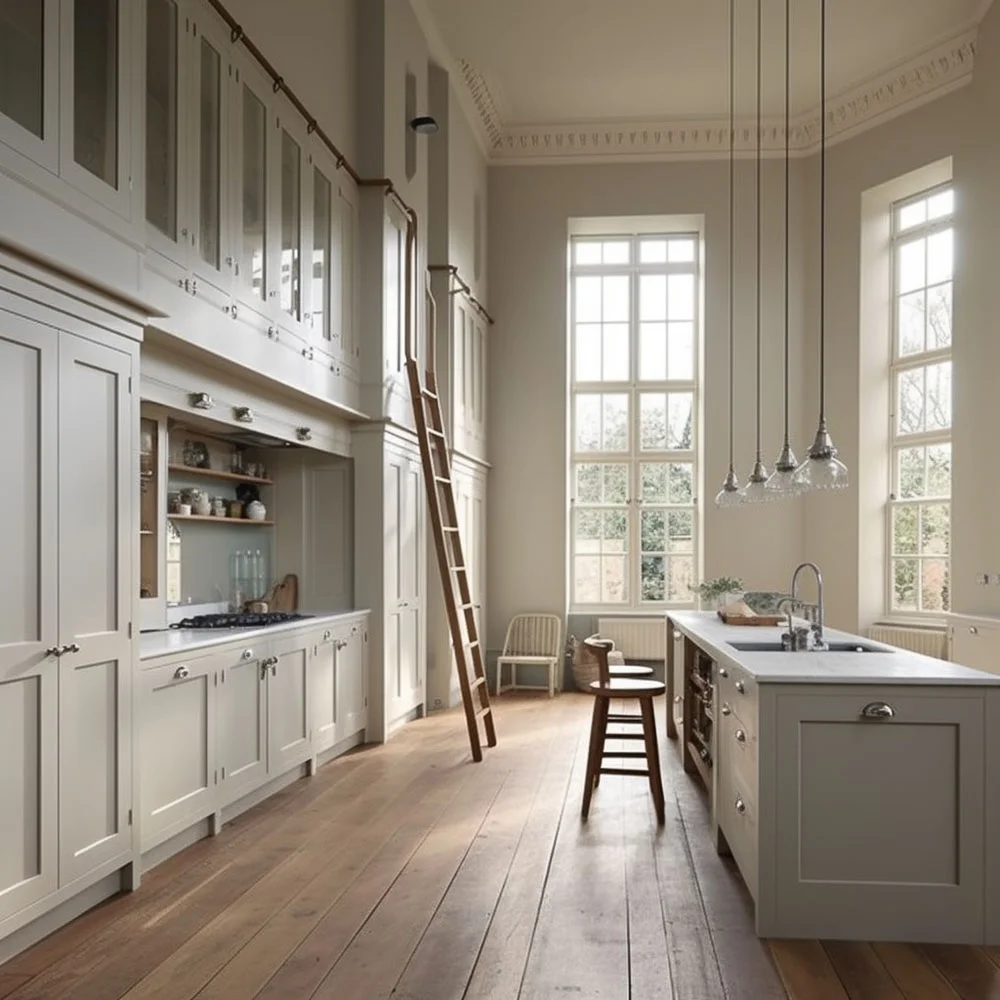
Embrace vertical storage
High ceilings provide an opportunity for ample vertical storage, ideal for maximising functionality.
Tall cabinets
Install solid wood cabinets that extend close to the ceiling to maximise storage space. The upper cabinets can store items that aren’t needed daily, while the lower cabinets can hold everyday essentials.
Open shelving
Open shelves add both functionality and style. Display items like decorative bowls, cookbooks, or glassware to draw the eye upwards, making the most of the height without overcrowding the space.
Rolling ladder or step stool
For easy access to higher storage areas, a rolling ladder or attractive step stool is both practical and visually appealing.


Ceiling height kitchen cabinets: how high to go
Ceiling height kitchen cabinets make the most of a tall room, but they are not the only answer. There are three common ways to handle the space above the worktop, and the right one depends on how much storage you need and how you will reach it.
Full height, finished with a cornice
Taking tall cabinets right up to the ceiling and finishing them with a cornice makes the furniture look built in and stops dust gathering on top. It suits period rooms in particular, where the cornice can echo the coving.
Stacked cabinets
If custom cabinetry is within your budget, double-stacked cabinets can extend from the worktop to near the ceiling, maximising storage and making the most of the height. Keep the lower, easy-to-reach row for daily things and the top row, sometimes glazed, for things you use a few times a year.
Leave a gap on purpose
In a very tall room, cabinets that stop short of the ceiling, with a shelf, canopy or display space above, can look better than a wall of doors. It also keeps the room lighter if windows or beams sit high on the wall.
High-rise (tall) units and larders
High-rise units, the tall housings and cupboards that run from floor to near ceiling, are where a tall kitchen earns its storage. A run of tall units for the oven, fridge and pantry storage, with lower cabinets elsewhere, gives a balanced look. A freestanding larder or pantry cupboard is another way to use the height without fitting cabinets on every wall.
Layered lighting for a balanced look
High ceilings can make kitchens feel more expansive, but they can also lead to uneven lighting. Use a layered lighting approach for a well-balanced, inviting space.
Pendant lights
Oversized pendants or statement chandeliers work well in kitchens with high ceilings. Hang them at eye level or slightly higher over islands or dining areas to create visual balance.
Recessed lighting
Install recessed lights strategically to ensure the entire kitchen is well-lit, particularly over work areas such as worktops, the sink, and the hob.
Under-cabinet lighting
Under-cabinet lights provide task lighting for food prep areas and add a warm, inviting ambience that balances the vertical lighting from above.


Kitchen ceiling ideas
High ceilings can feel stark without visual accents, so consider enhancing the ceiling design.
Exposed beams
In rustic or farmhouse kitchens, exposed wooden beams add texture and warmth, making the ceiling feel lower and the space more intimate.
Coffered or tray ceilings
In more traditional or contemporary kitchens, coffered or tray ceilings bring architectural detail and a touch of elegance.
Paint and wallpaper
Painting the ceiling a slightly darker shade or using wallpaper can add contrast and personality, drawing attention upwards while creating a sense of cosiness.
Coving and moulding
Oversized coving or thicker, more intricate moulding around the ceiling perimeter softens the transition between walls and ceiling, adding an elegant finish. Large coving brings proportion to high ceilings and frames the room beautifully.
Ideas for lower kitchen ceilings
If your ceiling is lower, the aim is the opposite: keep the ceiling pale, use recessed or flush lights rather than long pendants, and run cabinets to the ceiling in the same colour as the walls so the eye isn’t stopped by a hard line.


Choose the right cabinetry proportions
High ceilings require cabinetry that complements the space without overwhelming it.
Mixed cabinet heights
Mixing different cabinet heights adds visual interest. For example, you might use taller cabinets on the perimeter with shorter cabinets above the hob or sink.
Glass-front cabinets
Glass-front upper cabinets add an open feel, especially if they’re backlit, giving the room added depth and sophistication.
Make the island a centrepiece
A high-ceilinged kitchen can handle a larger island without feeling cramped, making the island a central feature in the room.
Large island with seating
Choose an island that provides ample worktop space and includes seating for family and friends. High ceilings allow for statement pendants that draw the eye downward and create a focal point above the island. See our kitchen islands for ideas.
Waterfall worktops
Consider a waterfall worktop for the island, adding visual weight that helps balance the tall vertical space above.

Use colour to create cohesion
The right colour palette is essential in a high-ceilinged kitchen to create a cohesive design.
Two-tone cabinets
Use two-tone cabinets to create visual interest while grounding the space. Darker lower cabinets and lighter upper cabinets can draw the eye downward, balancing the room’s height.
Warm or bold accents
High ceilings allow for bolder or warmer colours that might feel overpowering in a standard-height kitchen. Consider accent walls or hand-painted cabinetry in colours that add warmth and prevent the room from feeling too vast. We paint in any Farrow & Ball or Little Greene colour.


Add decorative features
High-ceilinged kitchens benefit from decorative touches that add warmth and personality.
Statement artwork or mirrors
Hanging large artwork or mirrors on walls extending towards the ceiling helps to fill vertical space and adds character to the kitchen.
Greenery
Tall plants or hanging planters soften the space and make it feel welcoming. Plants also add life and colour, making excellent use of the vertical space.
Decorative range hood or chimney breast
In kitchens with high ceilings, a decorative range hood can be extended upward to become a standout design feature, drawing the eye towards the height of the room. Alternatively, consider a large, traditional open chimney breast or inglenook, which adds architectural interest and gives the kitchen a warm, timeless feel.
Soften the space with textiles
Kitchens with high ceilings can sometimes feel stark or echoey, so adding soft furnishings is key to creating warmth and comfort. Full-length curtains or Roman blinds frame windows and soften the room. Rugs or runners, especially in front of the sink or island, provide a warm touch underfoot and reduce sound. Upholstered seating and other textile accents bring texture to the space.

How to plan a high ceiling kitchen
1. Measure the full height, not just the walls
Note the ceiling height, any beams, the height of window heads and where the coving sits. These decide whether cabinets can run to the ceiling or should stop short.
2. Decide what you will store up high
Top cupboards suit platters, seasonal things and spare stock. If you would rather not use steps, put the storage into tall units and a larder instead.
3. Plan lighting before the cabinets are fixed
Pendant drops, recessed lights and cabinet lighting all need wiring in the right places, so agree them early.
4. Pick a style that suits the room
Tall Victorian and Edwardian rooms often suit in-frame Shaker kitchens or Period English cabinetry with a full cornice. Our cabinetry is made in 10–12 weeks and delivered fully assembled, so plan that into your building work.
5. Set a budget
Tall cabinets and cornices add cost per metre. Our cabinetry starts from £1,180 per metre (Cottage), £1,818 (Town House) and £2,372 (Manor House), including painting and VAT. Complete kitchens from The White Kitchen Company start from £11,808. Our kitchen cost guide explains what else to allow for.
Frequently asked questions
Should kitchen cabinets go to the ceiling?
Often, yes. Ceiling height kitchen cabinets give more storage, look built in and stop dust gathering on top. In a very tall room, or where beams or high windows get in the way, stopping short with a shelf or canopy above can look better.
How do you fill the space above kitchen cabinets with a high ceiling?
To fill the space above kitchen cabinets in a high-ceilinged room, add a second row of stacked cabinets, a cornice that meets the ceiling, or open display space. Glazed top cupboards keep a tall run from feeling heavy.
What are good kitchen ceiling ideas?
Good kitchen ceiling ideas include exposed beams, coffered or tray ceilings, generous coving, wallpaper or a ceiling painted a shade darker than the walls. In a lower kitchen, keep the ceiling pale and use flush lighting.
What are high-rise kitchen units?
High-rise kitchen units are tall units that run from the floor to near the ceiling, usually housing ovens, a fridge or pantry storage. They suit high ceilings because they use the height without covering every wall in cabinets.
How do you make a high ceiling kitchen feel cosy?
To make a high ceiling kitchen feel cosy, bring the eye down with pendants over the island, darker lower cabinets, warm colours and soft furnishings such as blinds, rugs and upholstered seating, which also cut echo.
Planning a kitchen for a period home? See our guide to in-frame kitchens and project gallery for kitchens we have made for tall Victorian and Edwardian rooms and barn conversions.
Planning a kitchen for a high-ceilinged room?
Talk it through with one of our designers in our Northamptonshire showroom, at home or on a consultation call.