 Bespoke made in 10-12 weeks
  National Installation
  Worldwide Shipping


In-frame kitchens have doors and drawer fronts set inside a surrounding cabinet frame, rather than fitted over the front of the cabinet. That visible border is what gives them their distinctive, furniture-like appearance. You will also see the term written as “inframe kitchens” or “in frame kitchens”: all three describe the same construction.
We specialise in in-frame cabinetry because we love its proportions and the way it brings the character of traditional furniture into a kitchen. The frame is only part of the story: materials, joinery, hardware and fitting all matter. Here is what to look for in an in-frame kitchen, how it differs from lay-on construction, and what to consider before planning your own.
What is an in-frame kitchen?
Think of a cupboard door sitting within a frame, rather than covering it. When the door is closed, you can see the frame around it and a small clearance gap between the two. Across a run of cabinets, those borders create a rhythm that makes each cupboard feel like a considered piece of furniture.
The simplest way to recognise the construction is to open a door: the surrounding frame stays attached to the cabinet. Look at an open drawer as well, so you can see how the drawer front, opening and runners work together.
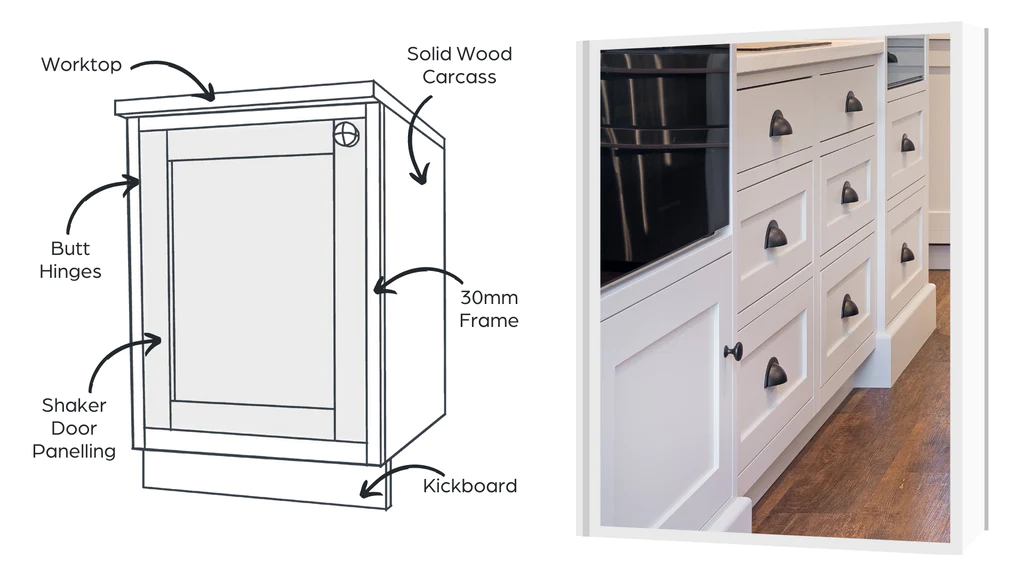
In-frame vs lay-on kitchens: what is the difference?
With a lay-on kitchen, the doors sit over the front edges of the cabinet instead of inside a surrounding face frame. This is often called an overlay design. In-frame and lay-on describe how the fronts meet the cabinet; they do not, on their own, tell you the quality of the timber, hinges or workmanship.
| Detail | In-frame | Lay-on |
|---|---|---|
| Door position | Inside a frame fixed to the cabinet. | Over the front edges of the cabinet. |
| Appearance | A visible border around each front, with a furniture-like feel. | Less visible framing, with a more continuous run of fronts. |
| Cupboard access | The frame narrows the opening relative to the cabinet behind it. | Without a face frame, the opening can be wider for a comparable cabinet. |
| Fitting | Careful alignment matters because the gaps around inset fronts are visible. | Accurate levelling and door adjustment still matter. |
| Price | The additional frame and fitting work can increase the price. | Often offers a lower-cost route, although premium designs can also be expensive. |
At The White Kitchen Company, we specialise in the detail of individual framed cupboards. Understanding the difference helps you recognise genuine in-frame construction and compare the specification behind the appearance.
The pros and cons of an in-frame kitchen
The advantages
Character without relying on ornament. The frame provides detail even when the doors, handles and paint finish are simple. It is particularly at home beside a dresser, a farmhouse table or other freestanding furniture, where a kitchen can otherwise feel quite separate from the rest of the room.
A reassuringly solid cabinet front. A well-made, securely joined frame contributes to the structure of the cabinet. That is a benefit of good construction, not a reason to ignore what is behind the door: inspect the carcass, joints, drawers and hardware as carefully as the front.
Scope to refresh the finish. With painted timber cabinetry, a future colour change need not mean a new kitchen. Suitable surfaces can be prepared and repainted, and hardware can be refreshed. This comes from the materials and finish, rather than being an exclusive benefit of in-frame construction.
A natural fit for both classic and pared-back interiors. In-frame does not have to mean elaborate. The width of the frame, the door profile and the handles all influence the result. A simple painted design can feel restrained; additional mouldings create a more decorative look.

A couple of things to consider
A framed rather than seamless look. In-frame cabinetry has a visible border around each door and drawer, so it does not create the uninterrupted appearance of a seamless kitchen. For those who love the character of traditional furniture, that definition is precisely the appeal. Simple door profiles, considered handles and a restrained paint palette can keep the overall look clean and understated.
A higher initial investment. An in-frame kitchen can cost more than an off-the-shelf frameless kitchen because of the additional frame and the work involved in fitting the fronts. It is worth looking at what that investment includes: the materials, joinery, hardware and finish, as well as the design. Our solid timber cabinetry can also be repainted in the future, giving you scope to refresh its appearance without starting again.
How much does an in-frame kitchen cost?
There is no single useful price for an in-frame kitchen without knowing the layout and specification. A small run of standard cabinets is a different project from a kitchen with a large island, bespoke larders, numerous drawers and integrated appliances.
For a meaningful comparison, ask suppliers to price the same layout and separate cabinetry from worktops, appliances, delivery and installation. Check whether VAT, painting, handles, internal fittings, end panels and finishing pieces are included. An apparently lower starting price may cover less of the finished room.
We publish kitchen prices and costed examples to help you plan before committing to a design. Use them alongside your proposed cabinet list, rather than comparing kitchens by room size alone.
How we make our in-frame kitchens
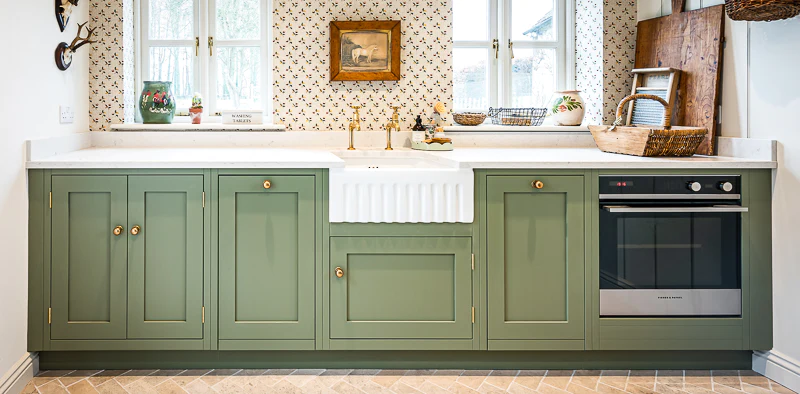
At The White Kitchen Company, our cabinetry is traditional in-frame and made from solid timber. Our painted cabinetry uses beech for the frames and door construction, poplar for the door panels, Paulownia for the carcasses and oak for the dovetailed drawers.
We use traditional brass butt hinges, concealed magnets for the door closing action, and Blum full-extension soft-close drawer runners. The cabinets are built as complete units in the workshop, rather than supplied flat-packed. Alongside our standard cabinet sizes, we can make cabinetry to bespoke dimensions.
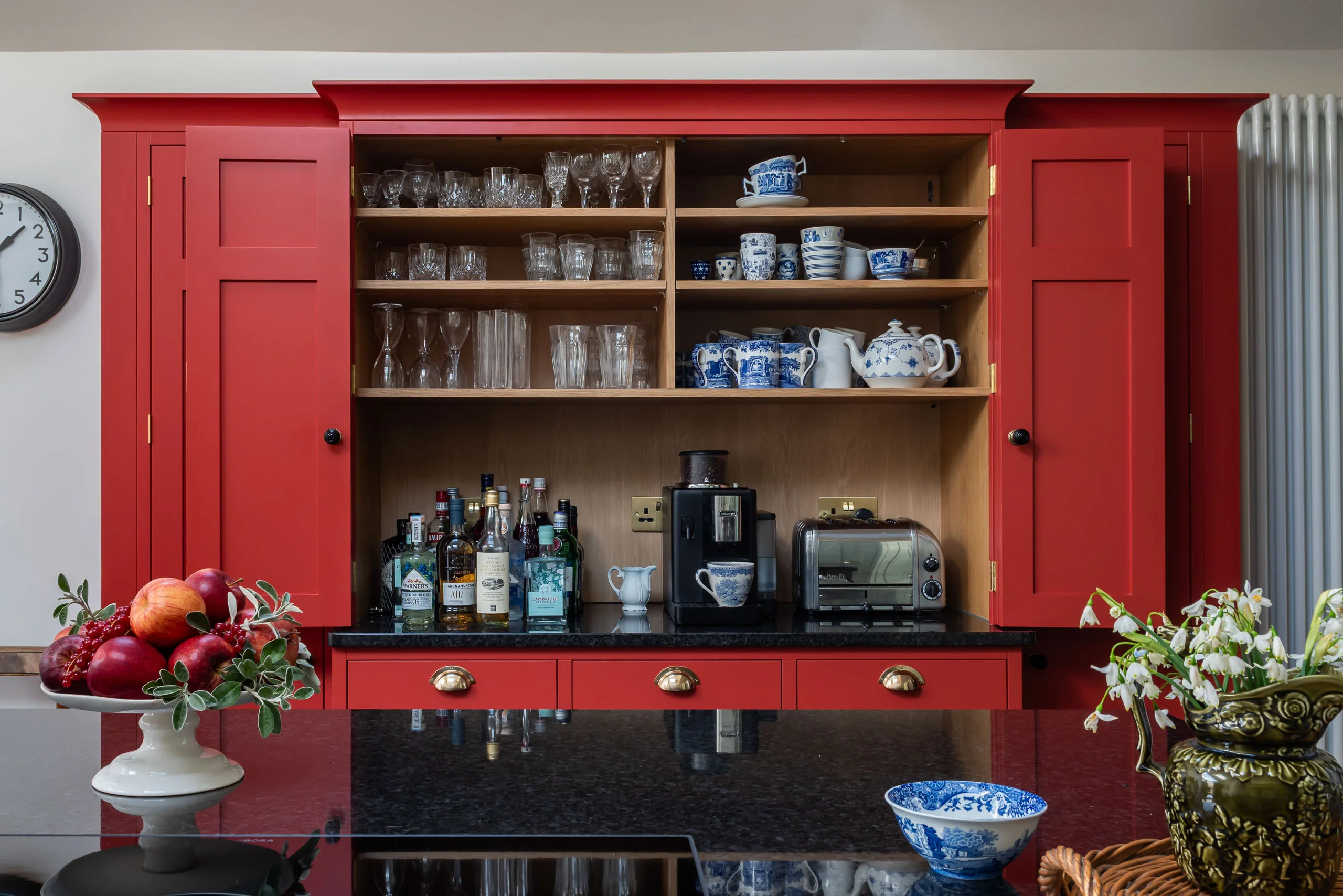
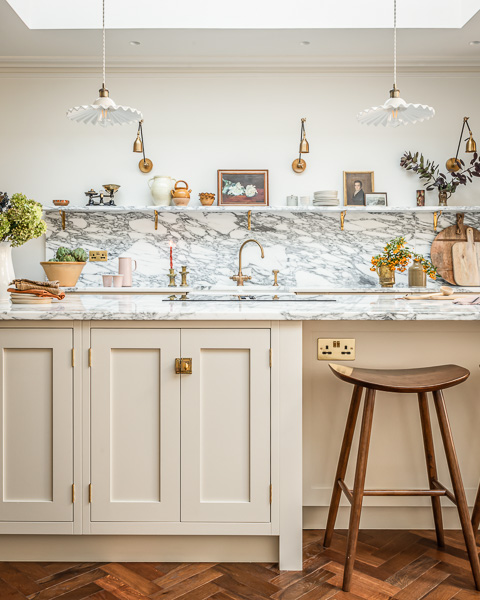
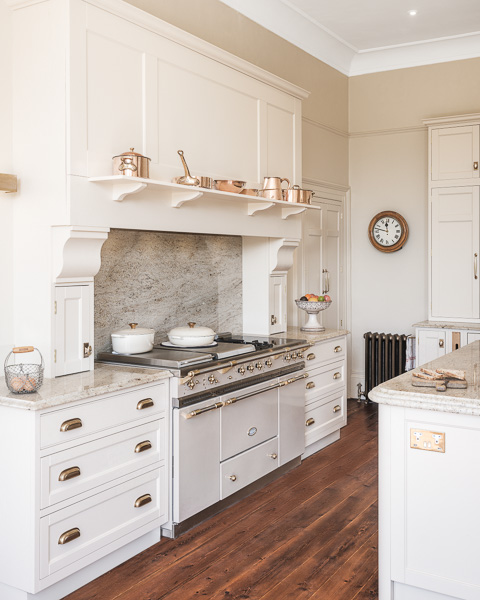
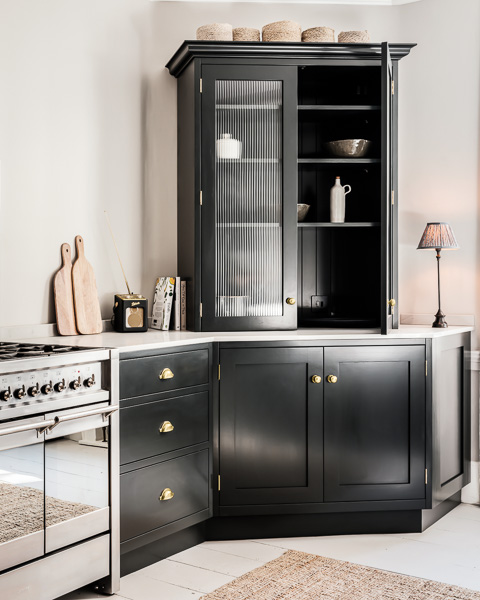
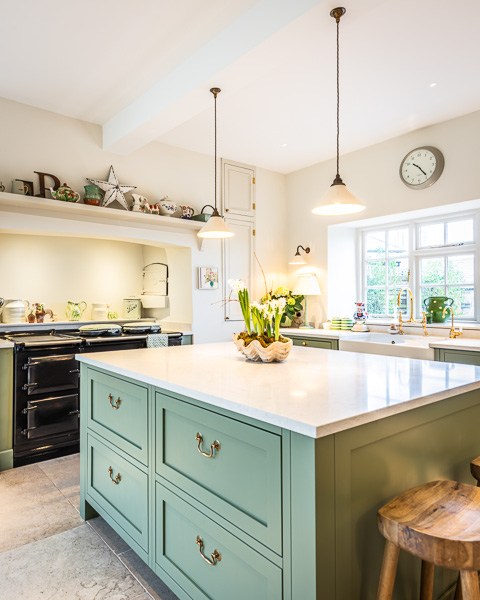
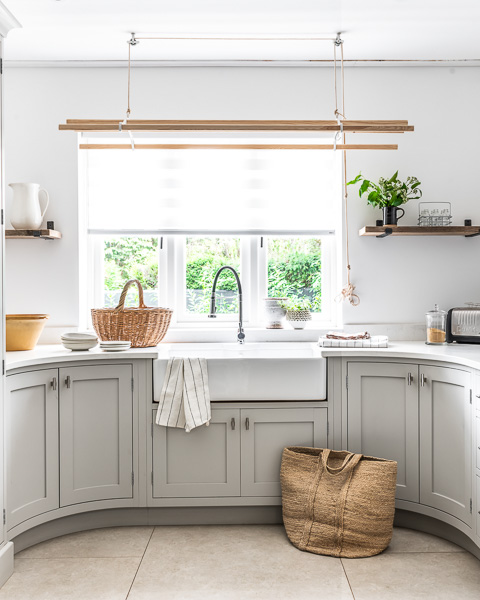
You can explore the details in our cabinet construction guide. The projects below show how that construction looks in finished homes, where the proportions, paint colours and surrounding materials make each kitchen different.
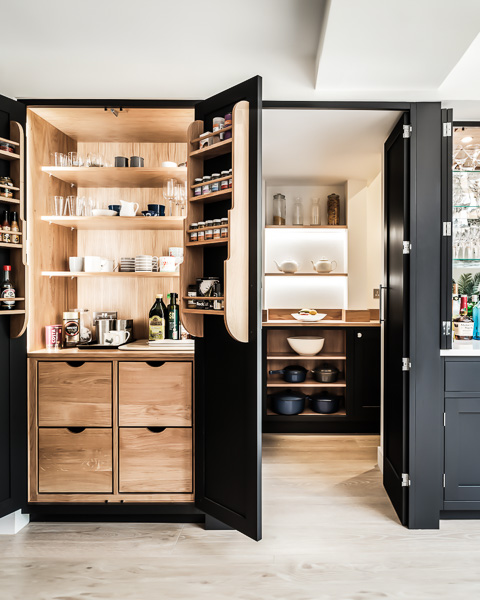
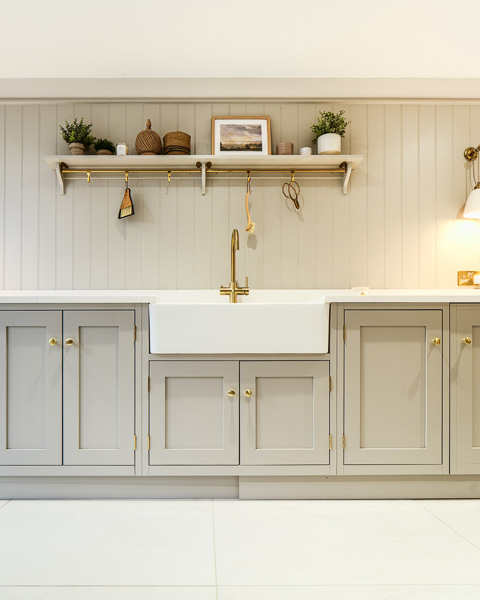
What to check before choosing your cabinetry
Photographs show the style; an open cabinet tells you much more. When comparing kitchens, ask to see a complete unit and work through these five checks:
- Open the door. Is there a separate frame fixed to the cabinet, or is the framed appearance part of the door itself?
- Ask for the material specification. Check the carcass, frame, door panel and drawer box separately. “In-frame” does not mean “solid wood throughout”.
- Measure the useful space. Compare clear openings and internal drawer dimensions, not just external cabinet widths.
- Try the hardware. Open drawers fully and check the door action. Ask which parts are adjustable and how replacements or repairs are arranged.
- Check the finished specification. Confirm the paint finish, visible end panels, appliance integration, installation responsibilities and aftercare before comparing final prices.
In-frame kitchen questions, answered
Is an in-frame kitchen the same as a Shaker kitchen?
No. Shaker describes a door style, usually with a simple recessed centre panel. In-frame describes how the door sits within the cabinet. A Shaker door can be made as either an in-frame or a lay-on design, so ask about both the style and the construction.
What is an in-frame-effect kitchen?
The term generally describes cabinetry designed to look framed without using the same separate face-frame construction. Terminology varies between suppliers. Open a sample door and ask whether the border is fixed to the cabinet or moves with the front.
Do in-frame kitchen doors drop?
Well-made doors, reliable hinges and accurate fitting all help maintain an even fit. We use traditional brass butt hinges on our in-frame cabinetry. As with any timber furniture, changes in humidity and everyday use can sometimes mean an adjustment is needed; the frame alone is not a guarantee against movement.
Can an in-frame kitchen have soft-close drawers?
Yes. Our drawers use Blum soft-close runners. Door closing is a separate specification: our traditional butt-hinged doors use concealed magnets. Always check doors and drawers individually rather than assuming “soft-close” applies to both.
Is an in-frame kitchen worth the extra cost?
For homeowners who value furniture-like detailing, solid timber construction and the option to repaint their cabinetry over time, an in-frame kitchen can be a worthwhile investment. Look beyond the initial appearance to the materials, drawers, hinges and finish. These are the details you will use every day, and they are central to how we build our kitchens.
See whether in-frame is right for your kitchen
The best way to understand the difference is to see the cabinets and open the doors yourself. Book an appointment with our team to explore the construction, finishes and layout options. Bring your room measurements or plans, along with a few photographs of kitchens you like, and we can help you work out which details deserve a place in your design.
