 Bespoke made in 10-12 weeks
 National Installation
 Worldwide Shipping


An Edwardian kitchen is light, practical and clean-lined: pale or pastel painted cabinetry, white glazed tiles, glass-fronted cupboards, a large Butler sink and a central table or island with a light worktop. To create one today, combine in-frame painted cabinets and period details with modern appliances hidden behind them.
Updated November 2026
What makes a kitchen Edwardian?
The Edwardian era ran from 1901 to 1910, and its kitchens were a clear break from the darker Victorian kitchen. Gas, electricity and clean running water were becoming common, and the focus shifted to light, hygiene and storage. The key features are:
- light, pastel and cream colour schemes
- white glazed wall tiles that are easy to keep clean
- cupboards with glass-fronted doors, replacing much of the open shelving
- a large, deep sink such as a Butler sink
- a central table or work unit with a light-coloured worktop
Edwardian kitchen colours and prints
Within quite a short period, Edwardian homes moved on dramatically from the dark-looking Victorian kitchen to an airy and roomy space. Pastel and light colour schemes defined the Edwardian kitchen style. There was a preference for flowery and delicate wallpapers too, but these were more likely to be seen in the living areas or bedrooms.
White tiles and bolder floors
Kitchens moved on from wooden surfaces and red clay quarry tiles to white-glazed tiles as sanitation became more important. White tiles showed up any dirt or grime, so it was easy to see whether a kitchen was clean. Bolder colours or patterns were still often used for floors and furniture.
Paint colours to consider
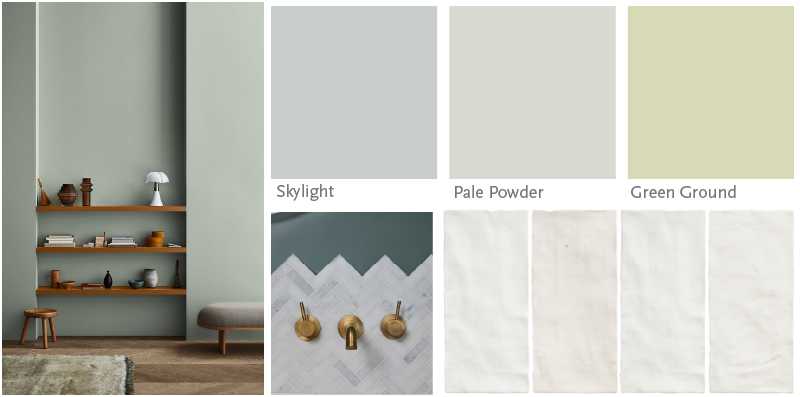
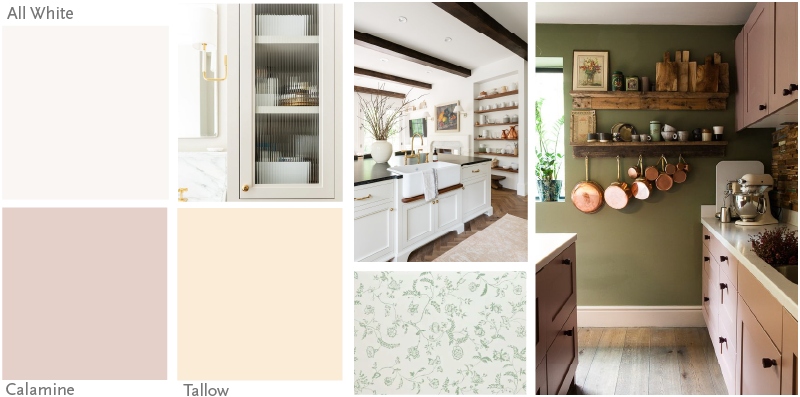
Skylight and Pale Powder, Green Ground, Calamine, and creams such as Tallow or Ringwold Ground and All White (all from Farrow & Ball’s range). We hand-paint our kitchens in any Farrow & Ball or Little Greene colour, so any of these can be used on your cabinetry.
A modern take
For reference, the farmhouse kitchen we designed features the modern style of a white kitchen, with a rustic, barn style carried through the surfaces, tiles and our Shaker cabinets. It is the most common style of kitchen we see currently, and when completed to a high standard it looks crisp and fresh.
Which of our cabinets would work best?
The need for space to store pre-packaged foods was the main reason cabinets were introduced during the Edwardian period. From open shelving to cupboards with glass-fronted doors, the Edwardian kitchen became much more accessible and stylish, and also cleaner and safer.
Mix solid and glazed doors
Our cabinets can be mixed from full-fronted units to glass, in any style we offer. Reeded glass fronts look stunning on a tall wall cupboard, so you can still have items on display but keep them slightly private.
Period English with Fusion drawers
Our Period English cabinets look great mixed with flat-fronted drawers from our Fusion range, giving a traditional kitchen a modern touch.
Finish with a cornice
To finish off your cabinetry, look at the different cornice options we offer. Each range has a slightly different design, but all work well with one another. We would recommend the Shaker cornice for a smooth finish that gives an Edwardian-inspired kitchen a modern but classic edge. Many Edwardian houses have tall rooms; our high ceiling kitchens guide covers how high to take the cabinets.
A typical Edwardian kitchen layout
The Edwardian period was a significant point in kitchen history. Gas and electricity were becoming increasingly common, and domestic boilers, ovens and refrigerators were the new technology of the era. Clean water was now widely available, so sinks became a much more important feature than ever before.
A space for every task
Because of this, each activity had its own space in the kitchen. The range or oven was still the central point of an Edwardian kitchen, and the sink was kept quite distant from the food preparation and cooking areas.
The central table or island
A central table or unit was essential to the working order of the Edwardian kitchen. In a modern version, a kitchen island with a marble worktop, like the one we completed in Bath, is very fitting. If possible, make room for a large, light-coloured worktop; it is essential to creating a period kitchen.
Edwardian fixtures and finishings
The sink
Kitchen fixtures were simple and utilitarian during the Edwardian era, and a well-made sink was always recommended, usually large, like the classic Butler sink. Butler sinks were traditionally made from fireclay ceramic, but today they are available in most hard-wearing materials.
Metals and hardware
Copper was seen as outdated, and enamelled iron was the new choice because it was easier to clean and resisted odours and chemicals. Today, simple brass or nickel knobs and cup handles suit the look; we supply brass handles for our kitchens.
How to create an Edwardian kitchen today
1. Start with light colours
Choose pale, chalky creams, pastel greens and blues or soft pinks for the cabinetry, and keep the walls light.
2. Choose in-frame cabinetry
In-frame doors suit period houses. All our ranges are in-frame, built in solid wood and hand-painted. Read our guide to in-frame kitchens to see how they compare.
3. Add glazed cupboards and a dresser
Glass-fronted wall cupboards or a dresser give the display storage the era is known for.
4. Use white tiles, a Butler sink and a light worktop
These three details do most of the work. A patterned or encaustic-style floor adds the bolder note Edwardian kitchens often had.
5. Hide the modern appliances
Integrated fridges and dishwashers behind painted doors keep the period look; a range cooker can stay on show as the focal point.
For period kitchens made under licence with English Heritage, see our English Heritage kitchens. Our cabinetry starts from £1,180 per metre including painting and VAT; see real kitchen prices or our kitchen cost guide.
The White Kitchen Company makes in-frame kitchens in solid wood with no MDF, hand-painted in any Farrow & Ball or Little Greene colour, including the Edwardian shades above. They are made in 10–12 weeks and delivered fully assembled, and complete kitchens start from £11,808.
Frequently asked questions
What does an Edwardian kitchen look like?
An Edwardian kitchen is light and practical: pale painted cupboards, white glazed tiles, glass-fronted cabinets, a large ceramic sink and a central table or work surface, often with a bolder floor.
What colours are Edwardian kitchens?
Edwardian kitchens suit pastels and creams. Farrow & Ball colours that suit the look include Skylight, Pale Powder, Green Ground, Calamine, Tallow, Ringwold Ground and All White.
How is an Edwardian kitchen different from a Victorian one?
Victorian kitchens were darker than Edwardian ones, with wooden surfaces and quarry tiles. Edwardian kitchens were lighter and more hygienic, with white tiles, more enclosed cupboards and new gas and electric appliances.
What are good Edwardian kitchen ideas for a modern home?
For an Edwardian-style kitchen in a modern home, pair in-frame painted cabinets in a soft colour with a marble or light worktop island, a Butler sink, glazed wall cupboards, a cornice and integrated appliances.
Planning a period kitchen?
Talk it through with one of our designers in our Northamptonshire showroom, at home or on a consultation call. Or call us on 01604 435835.